Archives

Contribute to Our Research

The Progress City Radio Hour Is On The Air!

The Progress City Radio Hour

…It’s here.

At long last, the inaugural episode of the Progress City Radio Hour has arrived. We’re still working on technical matters, and it’ll take a while to show up in iTunes, but for now – enjoy!


Related Posts...

Dick Nunis & The Amazing Tiny Pants

The Disney Look - Summer OptionsThe Disney Look – Summer Options for Supervisory and Office Personnel

Once upon a time…

Dick Nunis was the head of what is now known as Disney Parks & Resorts.

Nunis had risen through the ranks back in Walt’s day, eventually receiving the assignment of traveling to Florida to whip things into shape when Walt Disney World’s construction became bogged down and behind schedule. After twisting arms and busting tails in order to get the resort in working order, he continue to rise through the ranks until he was running the entire Attractions division.

Then things took a turn. Michael Eisner and Frank Wells arrived in 1984, and shifted the focus of the company drastically from theme parks to the moribund film division. Eisner wasn’t a theme park guy; while his push for prestige eventually led to a wave of expansion in the parks, he seemed at the time much more concerned with building his role as a media mogul. For the time being, the parks were on their own.

And so was Nunis. A wave of new executives from the film industry had arrived with no ties to Walt’s era, and Nunis increasingly became the odd man out in the corporate boardroom. As someone who had started at Disneyland in 1955, Nunis was an increasingly rare link to a bygone era.

So Nunis wound up in Florida. A stickler for the old principles from Walt’s day, it was perhaps easier on the executives in Burbank if Dick was posted to Orlando.

And so it was that, perhaps, Dick Nunis went a little stir-crazy.

It would be hard to blame him. Nunis had previously been at the center of everything, fighting to get the parks what they needed to meet Walt’s standards. But as control of what got built in the Disney parks began to slip further into the hands of the insidious Strategic Planning department, an army of accountants, and even the whims of Eisner’s sons, Nunis faced many more obstacles than he had in the past.

To Nunis’s credit, he was constantly pushing to create a unique and separate identity for Walt Disney World. This was a vestige of those early days, when the resort was the “Vacation Kingdom of the World” and clearly and obviously different from all other attractions in the area and even its corporate cousin Disneyland. As long as he could help it, Walt Disney World would be a distinct and unique vacation experience.

In 1991, though, Nunis went a bridge too far.

As the story goes, Nunis had been on a trip to Bermuda. There, it is perhaps no surprise, he saw men wearing Bermuda shorts – even businessmen. Apparently this caused something of a brainwave. Disney’s reputation – especially in Nunis’s day – hinged on a very straightlaced, businesslike appearance. But by incorporating the Bermuda look with the executive dress code at Walt Disney World, the resort’s management would look professional and corporate while also conveying the feel of the sunny tropics.

Besides, it would be far more comfortable than wearing a full suit in those humid Florida summers.

The result was astounding. George Taylor at Imaginerding recently posted an image from a 1991 Eyes & Ears in which the new dress code was announced. I think you’ll find the picture will be hard to forget.

Oddly enough, George posted his article as the following was passed along to me – a summary of the new dress code that was passed out to executives at the time. There were options for men and women, and I think you’ll agree that they’re quite impressive. In the end, there’s only one question – was this a great idea, or the greatest idea?

I am pleased to announce a new option in the Disney Look for the hot, summer months of June through September. During those months, Walt Disney World Co. supervisory and office personnel will be permitted to wear Bermuda/walking shorts. Please review this supplement to the Disney Look that spells out the conditions of the new guidelines.

This optional appearance style is meant to be a fun, cool, and professional look; and I think it will be great for the hot Florida summers. As the standard bearers of the Disney Image, you are responsible for upholding the professional reputation that we have worked so hard to create. I am counting on you to make sure our worldwide reputation for our appearance standards is maintained with this new look. If you have any questions at all regarding this new policy, please contact your respective Appearance Coordinator.

– Dick Nunis

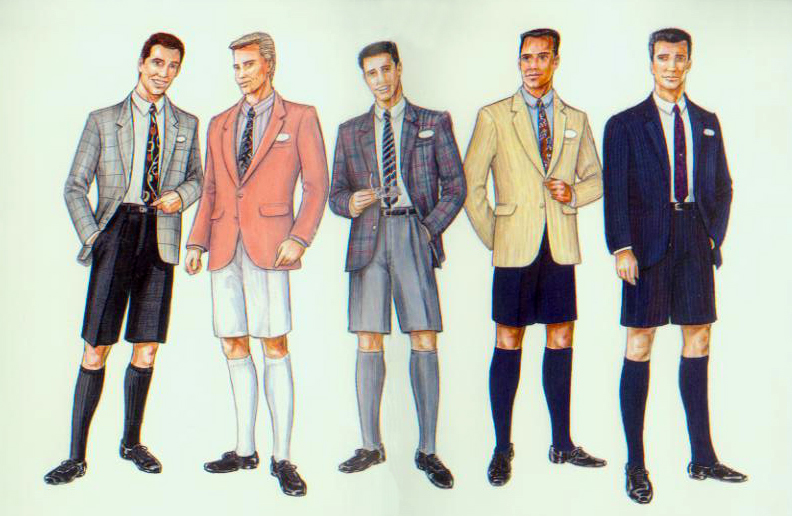
These dress options were intended, as stated, for supervisory and office personnel at the Walt Disney World Co. Florida property only. The “Bermuda/Walking Shorts Look” was allowed from June 1st through September 30th. Here are the options for the gents:
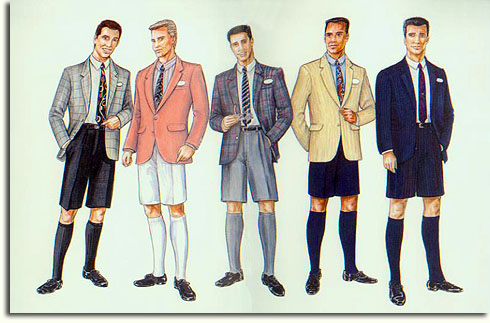
Disney Summer Look - MaleThe Disney Summer Look for the Gentlemen

Men’s Guidelines

In addition to the guidelines already listed in the Disney Look Book, the following option has been added for the months of June, July, August and September.

Bermuda/walking shorts with a shirt and tie are acceptable for management. However, the following stipulations will apply to this look:

1. The length of the shorts should be from the top of the kneecap to three inches above the top of the kneecap. Styles and lengths that are unacceptable include running shorts, bike shorts, tennis shorts, golf shorts, cut-offs and any style that suggests casual wear.

2. A shirt and tie must be worn at all times.

3. A blazer or jacket is optional.

4. This look must be worn with solid color knee socks that match the shorts.

5. Professional dress shoe styles that complement the color of the knee socks are acceptable. Casual or sport style shoes are unacceptable. Please refer to the existing guidelines for further shoe recommendations.

6. The fabric of the outfit can be a matching suit look in both jacket and shorts. Suits of this type are available in retail markets that deal with warmer climates. Acceptable fabrics should consist of linen or blends of fabrics that are traditionally found in men’s dress business trousers. Unacceptable fabrics include denim, poly/cotton blends, or any fabric that suggests casual wear.

7. Shirts must be standard business dress shirts in long or short sleeve. They can not have large elaborate prints or any design that suggests casual wear.

While the above option can be comfortable during the summer, it also has the potential to be extremely risky from a professional viewpoint. If you do not understand all the parameters of this option, please contact your respective Appearance Coordinator for clarification.

This option is subject to fashion each year, therefore, acceptable styles for the coming season will be issued each May by the Appearance Coordinators.

“This option is subject to fashion each year.” Yup, I’d agree with that.

But what of the ladies?
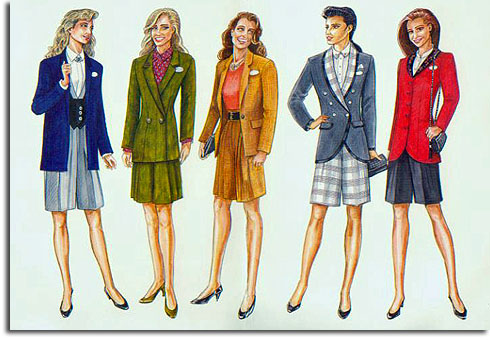
Disney Summer Look - FemaleThe Disney Summer Look for the Ladies. I like the one on the far right – she seems saucy.

Women’s Guidelines

In addition to the guidelines already listed in the Disney Look Book, the following option has been added for the months of June, July, August and September.

Bermuda/walking shorts with a blouse and jacket are acceptable for management. However, the following stipulations will apply to this look:

1. The length of the shorts should be from the top of the kneecap to three inches above the top of the kneecap. Styles and lengths that are unacceptable would include clam diggers, pedal pushers, short shorts, hot pants, bike shorts, spandex shorts, wrap style shorts, jams, all athletic styles (ie. golf, tennis, etc.). In addition, styles such as one piece rompers and short/suspender combinations are also unacceptable.

2. Jackets must be worn when not in the immediate work area. The jacket or blazer must be well constructed. To effectively balance the proportion of this silhouette, the jacket length should be the same as a traditionally styled blazer.

3. Blouses should be a dress style in long or short sleeve and must be tucked in. Cotton knit tops and sweaters are unacceptable.

4. Natural skin tone hosiery must be worn at all times. Socks of any variety are unacceptable.

5. Please refer to existing guidelines for shoe recommendations.

6. Acceptable fabrics should consist of wool, silk, linen, rayon, or blends of these fibers with polyester. One hundred percent woven cottons with a hard-worsted finish are acceptable. Fabrics must not suggest casual sportswear. Fabrics that are unacceptable include poly/cotton blends, denim, spandex, elaborate prints, knits, sheers, leather, suede, gauze, metallics or any fabric that suggests casual sportswear.

7. Dress, skirt and pant lengths will remain the same. Please refer to the existing guidelines for management

8. This option is unacceptable for maternity wear.

While the above option can be comfortable during the summer, it also has the potential to be extremely risky from a professional viewpoint. If you do not understand all the parameters of this option, please contact your respective Appearance Coordinator for clarification.

This option is subject to fashion each year, therefore, acceptable styles for the coming season will be issued each May by the Appearance Coordinators.

I like the ladies’ guidelines better. The list of poor short choices in #1 is fantastic, if only for the shout-out for jams. The list of materials in #6 makes me wonder what these executives were up to in their off-hours.

So there’s a peek at the casual, yet professional, atmosphere of Walt Disney World in 1991. Special thanks to Progress Citizen par excellence Another Voice, who clued me in to this tale and passed along the pretty pictures.

Related Posts...
In The Beginning… There Was Project Future

Long before the Pueblo Room was a glint in Dick Nunis’s eye, planning was underway for Walt Disney World. Who knows how long Walt had mulled privately over his ideas for a megaproject in the east; but even before the scope of his plans for the Florida scrub became apparent to the public, work was going on at Walt Disney Productions to define what, exactly, this project would be.

The following is an internal memo from WED Enterprises that details a planning meeting for “Project Future” that took place on June 14th, 1965. The meeting allowed Walt to present his ideas to the board members and legal staff of Walt Disney Productions, lawyers and consultants from the state of Florida, and Disney’s legal staff from New York City. This would, in turn, allow the staff an idea of the project’s scope and needs so that they could then begin researching and crafting the necessary legal groundwork. This planning would eventually culminate in the special district legislation in the Florida legislature that led to the Reedy Creek Improvement District and the creation of Walt Disney World.

Walt’s ideas for the property at this point were spelled out only in the roughest brushstrokes, but you can still get an idea of what he was driving at. While some of these ideas were clearly pie-in-the-sky, there are some interesting thoughts here about the underlying ethos of the resort and I leave it up to you to determine how well the company has carried over those philosophies into the modern day. It’s also amusing to see the concerns that faced the early planners, and how those concerns still rear their heads today.

“PROJECT FUTURE” PLANNING MEETING — JUNE 14, 1965

WALT DISNEY

Walt began by emphasizing the need to know “what kind of project would do well” in Florida.

Walt suggested this kind of study, together with our experience at Disneyland, would provide the background to help determine:

(1) What kind of facilities are required
(2) Who we will cater to – the Disney audience
(3) How we can get the tourist to stop for an extended period, and
(4) How big Project Future need be to start.

There would be, Walt said, a lot of things “like Disneyland”; but there would also be a lot new. He pointed to the World’s Fair as an analogy, graphically showing the Disney appeal in the East, and especially the population centers of the East (also a major source of Florida’s tourist market).

Walt expressed concern over the lack of permanent residents in the Orlando area, pointing out that other areas of the country are much better in this regard. Thus, the Florida market poses a different set of circumstances from Disneyland, which draws most heavily on a local California audience.

In terms of the hotels/motels, Walt emphasized the basic requirement to hold the visitor … to keep them in the area for an extended period. While the theme park would be the catalyst, reasonable prices and complete facilities (from trailers to sleeping bag areas) must be provided. He pointed to the skiers as an analogy; they don’t want to spend money for lodging, but they don’t hesitate to spend money for the skiing facilities per se (ski lift, equipment, etc.).

Walt emphasized the need to control the area, so that it does not become the jungle of signs, lights and fly-by-night operations that have “fed” on Disneyland’s audience. By keeping standards high, we can maintain the prestige of the entire area. The Disney motel/hotel facilities, for example, would be priced competitively with anything else that might be built in the area … but would be better places to stay, in every way.

Walt talked in terms of making everything its own attraction and tourist draw … the lake, the motels/hotels, fishing or whatever other facilities. These would each feed the Theme Park … and by offering diverse recreation activities, we could keep people in the area for a longer period of time.

“We’re ready to go!”, Walt said — ready to do the necessary analyzing and studies to determine the facilities required … then on to the Imagineering and finally the engineering.

As to “duplicating” parts of Disneyland, Walt suggested the public would expect it (many people could go to this park who would never be able to get to Disneyland). And Disneyland attractions are proven, engineered and ready to go into this Park.

A major consideration, Walt emphasized, would be to plan more for Rain (we can enclose big enough areas so people can keep spending money even if it rains). Recalling the Houston Dome, Walt commented about how big an area could be enclosed, and suggested there would be far less maintenance under a roof.

The basic point Walt made here is that enclosing means this concept could be built anywhere … even closer to the prime population markets of the East and Midwest. And, therefore, there could even be more than two Disneylands.

As to industry in the Project Future complex, Walt suggested industrial plants — with strong restriction — could be built along the road into and out of the Theme Park area … thus giving industry a tremendous Billboard exposure. (For comparison, see the land values along the Santa Ana freeway.)

Thus, Walt talked in terms of these basic areas:

(1) The Theme Park
(2) The motel/residential areas
(3) The industrial complex
(4) Other recreational facilities – the lake, golf, etc.

And so it began…

Related Posts...

The Weirdest Yearbook Photo Ever

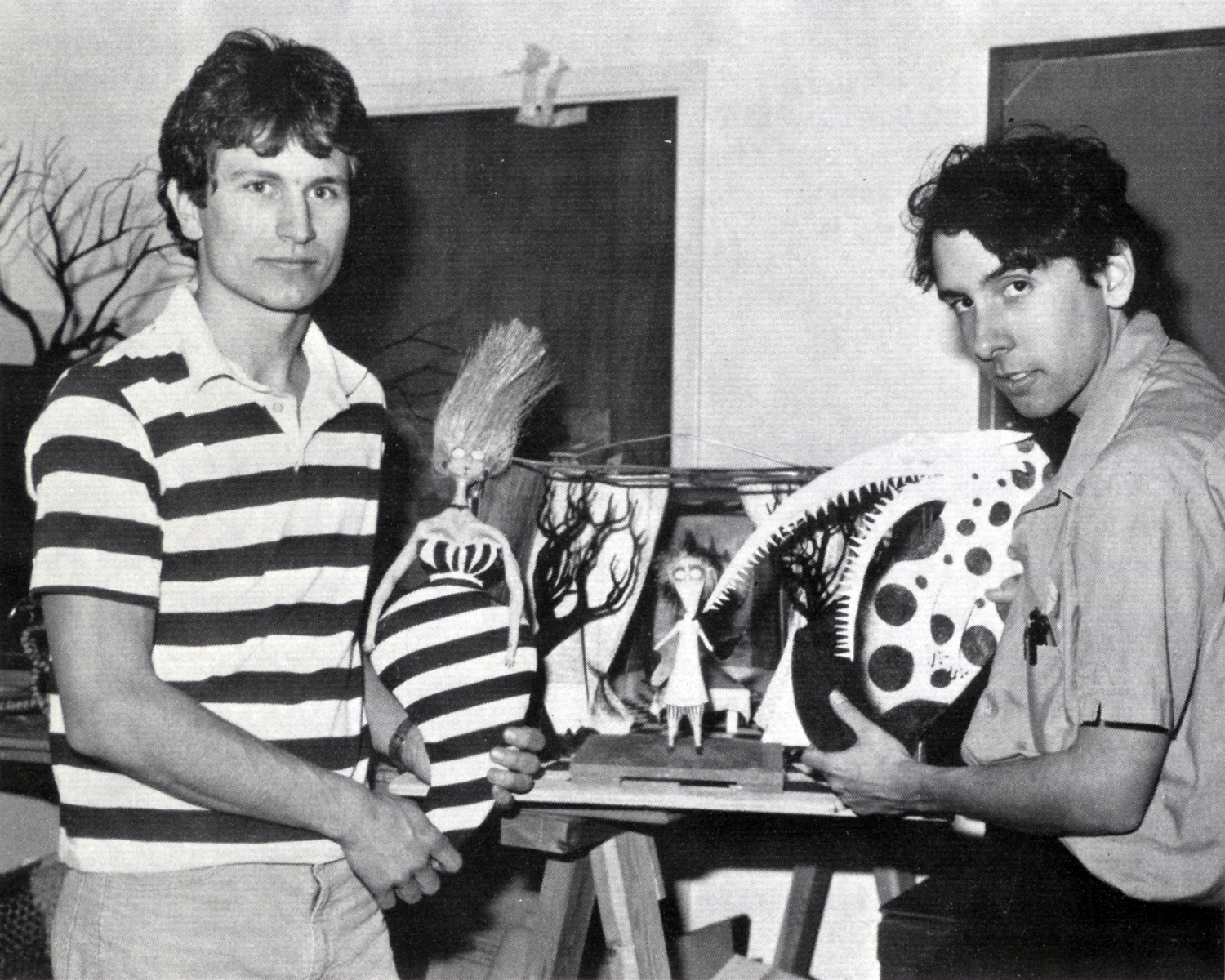
Rick Heinrichs and Tim Burton with some of the characters from "Vincent"Rick Heinrichs and Tim Burton with some of the characters from “Vincent” (Disney)

With Tim Burton’s Alice in Wonderland approaching theaters, it’s good to remember where it all started for Burton – right at the Disney Studios in the early 1980s, alongside a number of talented but underutilized young animators.

Tim Burton's VincentThe above picture, which shows a 24-year-old (!) Burton alongside artist Rick Heinrichs, comes from a 1982 issue of Disney Newsreel, the cast newsletter for the Disney Studios. The accompanying article promotes Vincent, a short film that the two had made together. The stop-motion short, as you might be able to tell, had more than a tinge of autobiography to it.

“Vincent,” the Studio’s newest stop-motion animation short film, was released with “Tex” at the Westwood Bruin last week. The film was designed as an experiment to test new stop-motion techniques for their possible use in feature films. It was so accomplished that Production Vice-President, Tom Wilhite, decided it should be released theatrically.

“Vincent” is a six-minute story of a little boy who thinks he’s Vincent Price. Tim Burton wrote, directed, and designed the characters for the film, and Rick Heinrichs was Producer and Sculptor for the show. Vincent Price narrated the story.

“Vincent” was entered in the experimental short film category at the prestigious Chicago Film Festival and won first prize, and it will qualify for Academy Award consideration. It will show at the Westwood Bruin for the duration of “Tex’s” engagement.

The studio, of course, didn’t really know what to do with Burton, and he would soon depart along with other young animators like John Lasseter. Burton, who also did conceptual work for The Black Cauldron, would make another short for Disney in 1984; Frankenweenie can be seen on the DVD release of The Nightmare Before Christmas alongside Vincent. Burton is also remaking it as a feature film for his next Disney project.

You can see, though, in the picture from the article that the oh-so-young Burton was already working on several of the key design styles that would emerge in his later work. Rick Heinrichs would make good for himself too, filling various artistic roles on a number of Burton projects and emerging as an art director on major projects like the second and third Pirates of the Caribbean films, the current release The Wolfman, and the upcoming Captain America.

Related Posts...

The Mystical Potties Of Morocco

Subtitle: 1,001 Arabian Flushes…

So ever since the long quest for photographic proof of EPCOT’s lost Danish bathrooms concluded, the hunt was on for those other lone bathrooms of EPCOT’s early days – the restroom complex that would one day be part of the Morocco pavilion.

World Showcase, 1982World Showcase, 1982

While the Morocco showcase would not open until 1984, you can tell from this 1982 photograph that work was already underway at that site well before the pavilion’s official “groundbreaking” in 1983.

The Morocco site in EPCOT, 1982

Of course, there was already something completed on the site – the bathrooms. Here they are, in all their glory, as they were on opening day in 1982:

The Morocco bathrooms at EPCOT, 1982The Morocco bathrooms at EPCOT, 1982

Guests were no doubt grateful for these solitary and mysterious bathrooms – the only such facilities between the United Kingdom and the American Adventure. The complex stood alone – almost like a French Foreign Legion outpost in the middle of nowhere – until it was joined by the rest of the Morocco pavilion in 1984.

Morocco pavilion, EPCOTThe Moroccan bathrooms, with pavilion attached (Photo found here)

Of course, the bathrooms of Morocco don’t have the cachet of mystery that the toilets of the lost Denmark pavilion have maintained. Sadly, we’ve all but exhausted the possibilities for porcelain archaeology in World Showcase – until that day where scientists hopefully unearth the plumbing fixtures for the mythical Equatorial Africa complex…

Related Posts...