
Oh Disney, what have you done?
Walt Disney’s 1940 masterpiece Fantasia and its millennial sequel Fantasia 2000 have been re-released in a “2-Movie Collection Special Edition” on both Blu-ray and DVD
 . Originally planned as part of the “Diamond” series of classic film releases, this “Special Edition” is anything but, skimping on the extras and omitting almost all of what made the “Fantasia Anthology” DVD release from 2000 so special.
The headliner for this particular edition is the long-awaited release of the 2003 short Destino, an abandoned collaboration from 1946 with artist Salvador Dali. The short, along with the feature-length documentary Dali & Disney: A Date With Destino, were originally planned for release in Roy Disney’s “Legacy Collection” line of DVD releases many years ago. That line was abandoned, though, and the material has sat on the shelf until now. It’s exciting to finally get to see it all, but seeing as it was essentially “found” material it doesn’t exactly earn much credit for this new release. In fact, what supplemental material appears on this release is all of great interest and quality, it just doesn’t all necessarily have much to do with Fantasia. This is especially galling in the light of the early promos for the release (when it was still a “Diamond Edition”), which promised a load of Fantasia-related material and something called “Fantasia World”, which we assumed to be the four shorts originally produced for the never-finished Fantasia 2006.
But the real measure of this set’s shortcomings is in how incredibly far short it falls of 2000’s Fantasia Anthology. There’s a nearly endless stream of fascinating material from the various Fantasia projects, but it’s not to be found here.
The Films
Fantasia
Do I really need to sell you on Fantasia?
One of the classics of Walt’s golden age, it’s had a complicated history in theaters and on home video. The original, 125-minute release from 1940 was too far ahead of it’s time, as all but a handful of theaters could support its proprietary Fantasound multi-channel sound system. This original “roadshow” presentation was chopped to 81 minutes by distributor RKO when the film went into wide release in 1941, omitting not only a 15 minute intermission but also the entire first animated segment and all the live-action interstitials featuring host and musicologist Deems Taylor.
The deleted animated footage was returned for subsequent releases, but the host segments remained mostly unseen for decades as various edits of the film were presented for re-release. In 1982 the film’s entire score was re-recorded by conductor Irwin Kostal – the first time a soundtrack had been digitally recorded – and the Taylor narration was completely eliminated. The original degraded elements of the Stokowski score were cleaned and restored for the 50th anniversary re-release in 1990, although the digital restoration of the film still omitted the live-action interstitials. These were finally restored for the 2000 DVD release, which returned the film to its original running time. But even that’s not the whole tale.
The 2000 release was billed as “complete and uncensored” which, of course, was untrue. There remained slight edits to the live-action material surrounding the intermission, and the film continued to feature digital censorship in the Pastoral Symphony segment to omit an offensive racial stereotype. The original sound elements for the Taylor scenes had degraded years before, so while the visuals for these segments were restored they were dubbed over by Disney voice artist Corey Burton. This new release restores all remaining live-action edits but still includes the censorship of the Pastoral Symphony and the dubbed Burton narration.
Believe me, that’s the abbreviated tale of all the changes made to the film over the years. And it doesn’t even include the film’s complicated history and development, as well as all the plans to continue the Fantasia experience with new segments over the years. Walt had big plans for his great animated experience, but sadly none came to pass.
Fantasia is still extraordinary, and it shines in Blu-ray. One wishes that the advantages of branching technology could have been used to explore the different cuts of the film, and to even give viewers the option of viewing the film without digital censorship. Even more desirable would be the option to hear what elements remained of the original Taylor narration.
Still, the film is in its most complete home video presentation ever and still manages to amaze. The animation is, simply speaking, spectacular. The effects animation in the Nutcracker Suite, the science-factual planetary formation and dinosaur battles from Rites of Spring, the incredible Vlad Tytla animation in Night on Bald Mountain, and Mickey at his best in Sorcerer’s Apprentice – it all holds up. The abstract imagery of Tocatta and Fugue in D Minor, inspired by the works of filmmaker Oscar Fischinger, who actually briefly worked for Disney, makes one wonder where Disney animation could have gone had the film initially succeeded.
While it’s hard to endorse this half-hearted Blu-ray release, one can’t deny the appeal of Fantasia itself.
Fantasia 2000
One of the most exciting theater-going experiences in my life was settling down in the Muvico IMAX in Orlando in January of 2000 to see Fantasia 2000 on the big screen. Because of my love of Fantasia, and the excitement of seeing a sequel finally arrive after sixty years, it’s rather difficult for me to be subjective about the film.
It isn’t perfect, of course, and it can be inconsistent at times. Not all sequences are, animation-wise, up to the quality of the original film. But the sequel’s successes far outweigh its shortcomings; the Rhapsody in Blue segment alone is worth the price of admission, and the Firebird Suite gives me reason again to lament that the brothers Brizzi are no longer working for the studio. Sadly the film’s low point comes during the showcase for Donald Duck, Pomp and Circumstance, which is oddly timed and loosely animated and fails to take advantage of the humor potential of its premise and lead character. This carries over to the loosey-goosey character animation during the interstitial segments, which follows the off-model trend in modern interpretations of classic characters.
One of the potential concerns of the sequel was replacing the single narrator of the original with various “celebrity” introductions in the live-action interstitials. Thankfully, these turned out pretty well and the live-action segments of the film have a pretty classy and well-designed atmosphere; the orchestra seems to be floating in space with a virtual orchestra shell swooping in and billowing above like sails. These effects managed to re-create the vibe of the original while updating it with a modern aesthetic and the result was quite impressive on the IMAX screen.
All in all it’s a worthy sequel to the original and again I must lament that the grand Fantasia experiment was not continued afterward.
The Discs
Released November 30, 2010 – Rated G – 125 minutes (Fantasia), 75 minutes (Fantasia 2000)
4-Disc Blu-ray Combo Pack (2 Blu-ray discs + 2 DVD discs) – $45.99
2-Disc DVD – $39.99
Per usual, this film has been released in Blu-ray and DVD editions; the Blu-ray “4 pack” contains both discs of the DVD edition. While a nice touch for early Blu-ray adopters, this strategy leads to a lot of duplicated material – if you hear “4 disc set” you might not expect something as bereft as extras as this release. This problem is exacerbated by the fact that this is a two-film edition – instead of getting a full disc of extras you just get one Blu-ray for Fantasia, one for Fantasia 2000, and one DVD for each as well. Compare this to the 2000 release, which contained three feature-packed DVD discs for the same two films.
Video & Audio
At least the films look good. The original Fantasia is presented in its original 1.33:1 aspect ratio, while Fantasia 2000 is presented in 1:78.1. The original film has been restored several times now, and its sequel benefits from the digital production pipeline from whence it came.
Audio on the Blu-ray is in 7.1 DTS-HD Master Audio 5.1 “Disney Enhanced Home Theater Mix”, while the DVD features the 5.1 Disney Enhanced Home Theater Mix.
Bonus Materials
This, of course, is where this collection falls flat on its face. Fantasia has perhaps more potential supplemental materials than any Disney film, and my interest in the film’s development is endless. With all the unreleased material created for Fantasia and its sequels, and the film’s position in the Disney canon, it deserves the highest possible quality release. Instead, we get this.
What’s ironic is, as I’ve stated, what is here is quite good. A lot of this material ties in with the Walt Disney Family Museum, and it’s great to see Diane Disney Miller involved in an “official” Disney home video release. I’ve been waiting for years to see the included documentary about Destino, but again – where’s all the Fantasia stuff? Where are the deleted segments, and the finished but unreleased segments for Fantasia 2006?
As is typical, the DVD release contains fewer features than even the sparse Blu-ray edition. In the list below, I’ve denoted with an asterisk those features which do appear on the DVD.
Features
- Fantasia
- Audio Commentary * – with Disney historian Brian Sibley
- Disney Family Museum * – This five-minute short takes a look at the Walt Disney Family Museum in San Francisco, via a brief tour by Diane Disney Miller. Along the way, Diane points out some of the museum’s artifacts pertaining to Fantasia.
- Disney View – This feature apparently is intended to make the 1.33:1 aspect ratio of the original film palatable to “these kids today.” It fills the rest of the 16×9 widescreen frame with artwork by a Disney artist, but this tends to just prove more distracting than it’s worth. Just watch the movie!
- The Shultheis Notebook: A Disney Treasure – This 14-minute feature is a real treasure of this set, as it discusses the recently rediscovered “Shultheis Notebook” of Disney filmmaking secrets. Herman Shultheis was an effects man on the original Fantasia, and kept a detailed notebook describing how the film’s elaborate and groundbreaking visual effects were created. Many of these techniques were lost to memory before the notebook was discovered in Shultheis’s estate. It has since been purchased and restored by the Walt Disney Family Museum. This is a fascinating feature, and underlines how truly innovative Fantasia was, but it would have been nice to be able to read the notebook itself!
- Interactive Art Gallery – A limited amount of production art from the film is presented in an “interactive” gallery that is way, way more complicated than it needs to be.
- Audio Commentaries from Fantasia Legacy Collection – The only carryover from the original 2000 DVD set, these two commentaries are well worth checking out. The first features executive producer Roy E. Disney, conductor James Levine, animation historian John Canemaker, and Scott McQueen, manager of film restoration. The second contains interviews and story note recreations by Walt Disney, hosted by John Canemaker.
- Fantasia 2000
- Musicana – Walt’s Inspiration for a Sequel * – This is another fantastic extra; the ten-minute featurette chronicles the development of Musicana – a Fantasia sequel focusing on world music that was planned and eventually abandoned in the late 1970s. It features a load of new artwork that I’ve never seen before, including lots of story sketches by Mel Shaw that were used to pitch and structure the project. I’ve never seen this much about Musicana in one place, and for the first time I really believe that this would have been a wonderful project and highly enjoyable. Get to work, Disney! This material is golden.
- Dali & Disney: A Date With Destino – This feature-length documentary chronicles the brief period in the late 1940s when surrealist Salvador Dali took up a residency at the Disney studio. At a whopping 82 minutes, this documentary is actually longer than Fantasia 2000 itself! One could question whether this historical incident deserves more than an hour of scrutiny, but remember that this was originally intended as a separate home video release in the abandoned Legacy Collection line. And while the movie spends too much time early on recounting the early life of Walt Disney and trying to draw parallels with Dali, the stories of the Disney-Dali relationship themselves are amusing and interesting, and the later segments of the documentary discussing the 2003 revival of Destino are also intriguing. As usual it makes one miss Roy Disney, who championed oddball legacy projects like this in the later part of his career. It also reminds us how many truly interesting things were cooking at Disney animation just a brief decade ago.
- Destino – The seven-minute short, finished in 2003, began with a collaboration between Disney and Dali in 1946. While intriguing, I can’t help but wish some of the digital elements had been omitted in favor of traditional methods. Budget issues also played into the decision to use limited animation at times, but it’s still an intriguing artifact and a rather amazing piece of history. It’s hard to get out of your head.
- Audio Commentaries from Fantasia Legacy Collection – From the 2000 collection, come these commentaries. The feature has a commentary from executive producer Roy E. Disney, conductor James Levine, and producer Don Ernst, while each segment features commentary from its own directors and art directors.
In Summary…
Fail. This is a total failure on the part of Walt Disney Home Entertainment, and shows how far the bar has fallen since the halcyon days of 2000. There are some truly worthy featurettes on the disc, and it’s good to see Destino and its attendant documentary, but this package is far from what it could and should have been. Long story short, if you have the Fantasia Anthology from 2000, be sure to hold on to it. If you don’t, it’s time to hit eBay.
Related Posts...
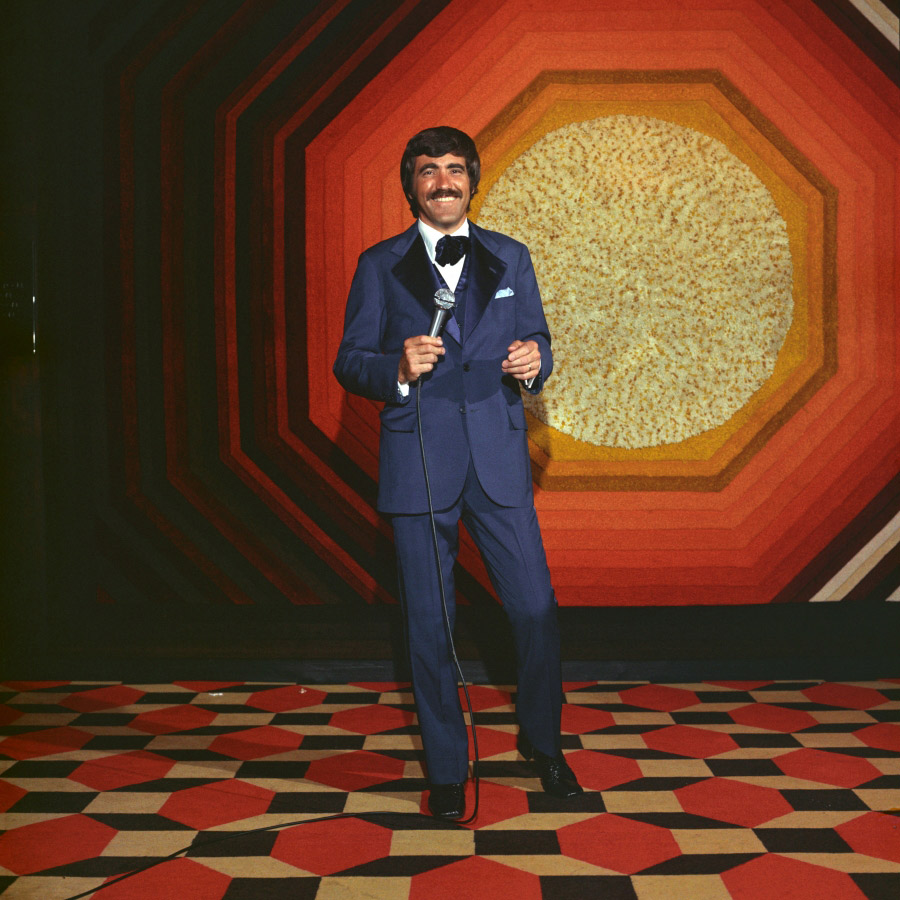 A very groovy Jimmie Rodgers holding court in the Top of the World Lounge at the Contemporary Resort





Recent Comments