Contribute to Our Research |
By Michael - July 2nd, 2010  Bumble Boogie, anyone? Here’s something I’ve been waiting to hear about for a while.
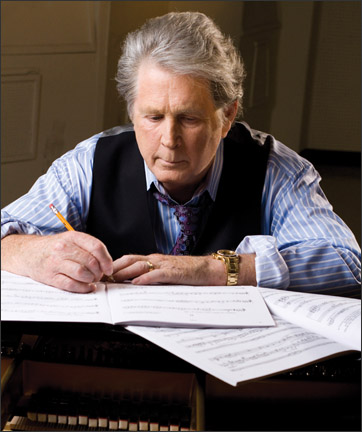
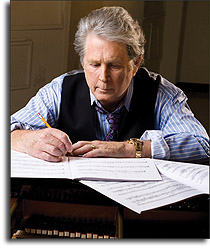 On August 17th, the new “Disney Pearl” imprint will release an album by the great Brian Wilson containing covers of works by George and Ira Gershwin. Some of these songs are well-known standards, while two are previously unfinished compositions that Wilson has completed for this record. On August 17th, the new “Disney Pearl” imprint will release an album by the great Brian Wilson containing covers of works by George and Ira Gershwin. Some of these songs are well-known standards, while two are previously unfinished compositions that Wilson has completed for this record.
The songs will get the full Brian Wilson treatment; with production by Wilson and featuring his band on backing instruments and vocals, the new recordings will feature his trademark lush orchestration and stacked vocal harmonies. The album begins and ends with a capella vocal renditions of 1924’s Rhapsody in Blue, a conceit that’s reminiscent of Wilson’s concept album Smile.
The path to this release began last year when the Gershwin estates and their publisher gave Wilson access to over 100 demos, unfinished pieces, and song fragments that were left incomplete when Gershwin died in 1937. Wilson then selected two of these for the project. The first, The Like in I Love You, was originally known as Will You Remember Me? before it was cut from Gershwin’s musical Lady, Be Good! in 1924. The second new piece, Nothing But Love, was adapted from a song fragment called Say My Say which was abandoned in 1929.
Brian Wilson Reimagines Gershwin hits stores and online music sellers August 17th; a vinyl pressing will be available on August 24th. More information is available at Disney’s music site and Brian Wilson’s site, or you can follow Disney Music on Facebook or Twitter.
Track Listing:
1. “Rhapsody in Blue”/Intro
2. “The Like in I Love You”
3. “Summertime” (from Porgy and Bess)
4. “I Loves You, Porgy” (from Porgy and Bess)
5. “I Got Plenty o’ Nuttin” (from Porgy and Bess)
6. “It Ain’t Necessarily So” (from Porgy and Bess)
7. “’S Wonderful” (from the Broadway musical “Funny Face,” also used in MGM film “An American in Paris”)
8. “They Can’t Take That Away from Me” (used in the film “Shall We Dance” and nominated for Academy Award)
9. “Our Love is Here to Stay” (from the film “The Goldwyn Follies” and MGM film “An American in Paris”)
10. “I’ve Got a Crush on You” (used in Broadway shows “Treasure Girl” and “Strike Up the Band”)
11. “I Got Rhythm” (from Broadway show “Girl Crazy”)
12. “Someone To Watch Over Me” (from Broadway show “Oh Kay!”)
13. “Nothing But Love”
14. “Rhapsody in Blue”/Reprise
Related Posts...
By Michael - July 2nd, 2010 As part of our look back at the life of Disney artist Herbert Ryman, I’ve asked a few people who knew Herb to say a few words about his work or about working with him. After all, isn’t it better to hear from people who were actually there?
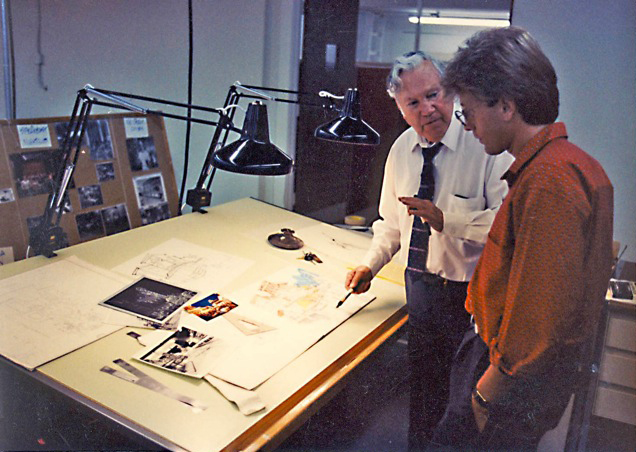
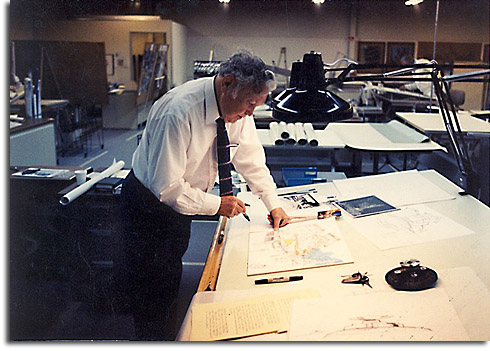 The artist at work at Walt Disney Imagineering, 1988 Our first look back comes courtesy of Imagineer Eddie Sotto, who spent thirteen years at Disney before working his way up to Senior Vice President, Concept Design, and then leaving the company in 1999. He is currently the head of his own design firm, Sotto Studios, and is one of the partners behind the Riviera Restaurant in Los Angeles.
Eddie worked with Herb Ryman at the end of the senior Imagineer’s career, when they were both working on designs for the Euro Disney project. Sotto was the show producer for the park’s Main Street area, and was working on some incredible designs for a Main Street based on urban America in the 1920s. Says Eddie:
Herb Ryman would sit and paint while looking at you. This to me was a great display of his instinctive talent. He would take the most unlikely color and then dab it on the canvas in a single gesture guided by his gut. And it worked. Look at some of his color choices. He was led by emotion and only gave you enough information to move you in the way he was moved. “Specifically vague”, he’d say. His favorite artists were Sargent and Degas. Like Hitchcock and his passion for previsualization, Ryman was just committing his immense catalog of people and places to a tangible medium.
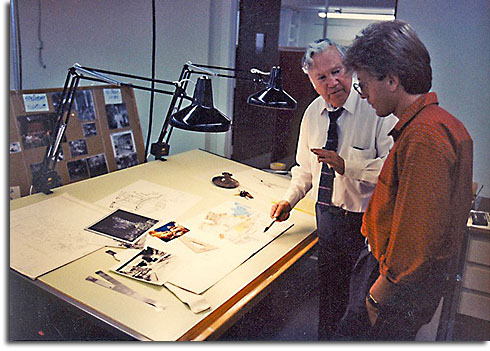 “A very patient teacher and fun guy. He’s telling me how to use markers on tracing paper.”
Funny story. One day I was working on a resort idea for the Paris park and thought that combining the lesser hotels into a more impressive central “Progress City” like core could be progressive and magical. But what shape? I’d seen Fritz Lang’s Metropolis and recalled the central building in that film. Herb walked in after lunch with the fan clutch from his Mercedes Benz that had been replaced at the dealer and I thought it was the perfect model for the new hotel. The idea of building a monolithic German car part in the French countryside would be the ultimate inside joke. It actually was the shape from the film and would have been awesome. Herb loved the idea too. Here’s an image of us together with the fan clutch on the board.
 “The infamous Mercedes fan clutch is in his hand as he is explaining our little inside plot to the photographer. I had done a thumbnail of it as a hotel on the board just below it. You can see the sketches of the speakeasy club on the storyboards. Must have been 1988?” The Speakeasy that Eddie mentions was one of the ideas for the 1920s-inspired Main Street area for Euro Disneyland; the secretive Prohibition-era facility would have featured a hidden Cotton Club style jazz venue.
What’s funny about the Mercedes part is that it really does look like the building in Metropolis. Imagine what all the French elites who cried foul at the “cultural Chernobyl” would have said about that!
Special thanks to Eddie Sotto for sharing this story and the pictures above. We’ll have more of Herb’s art for the Euro Disney project in a later story. If any of our readers worked with Herb and would like to contribute a memory or some thoughts about his art, feel free to drop me an email.
Related Posts...
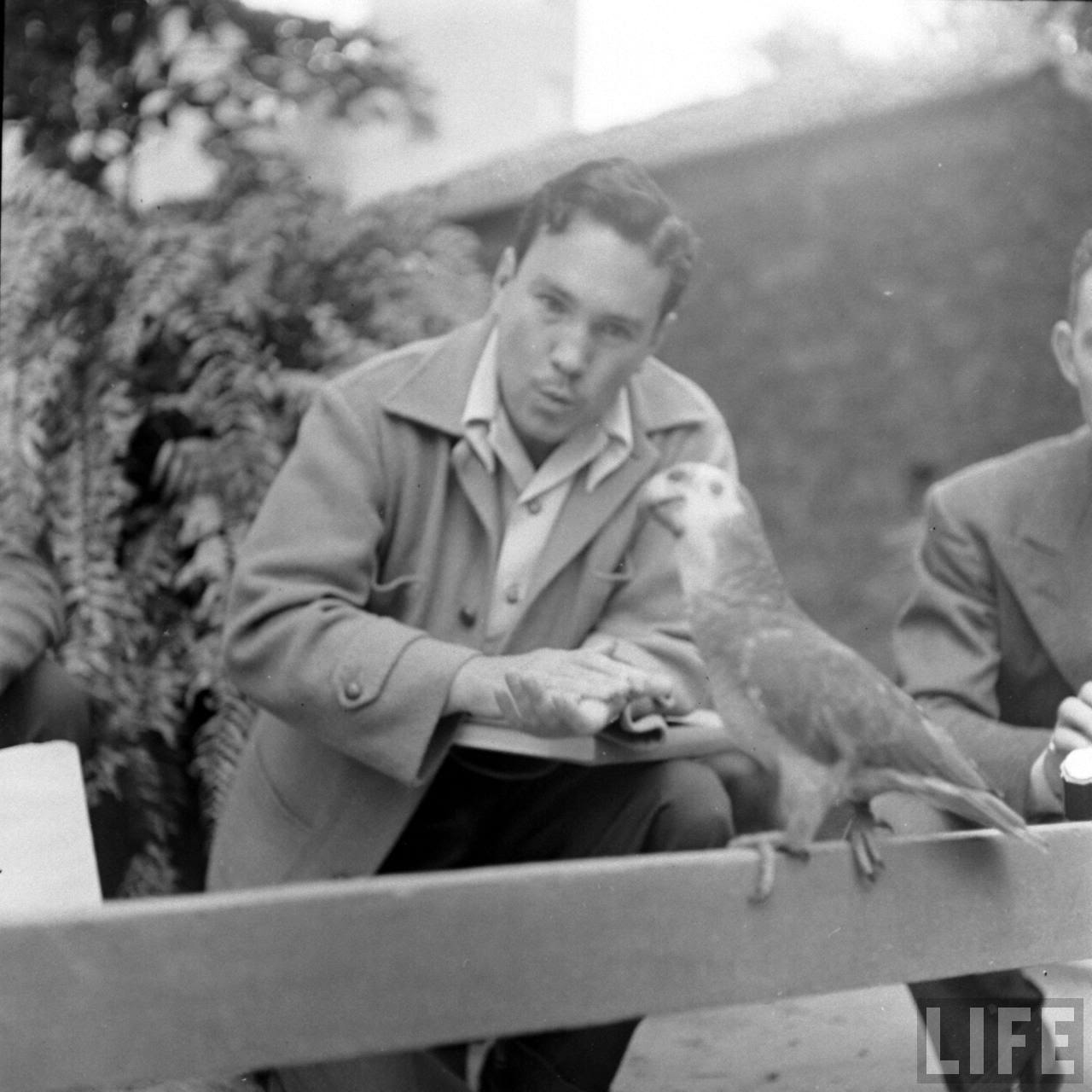
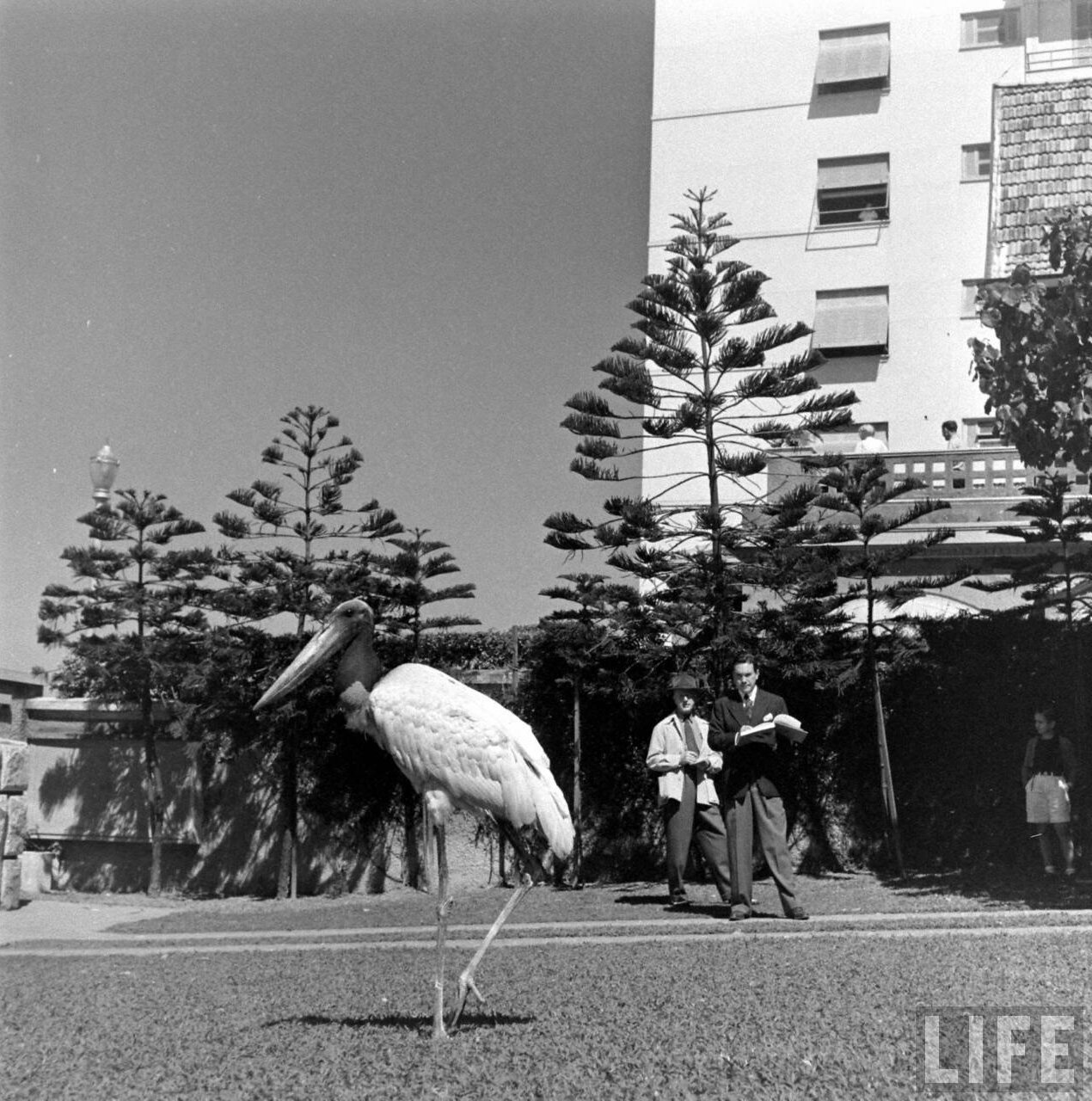
By Michael - June 29th, 2010  Herb Ryman greets a papagaio who will soon become famous – Rio de Janiero, 1941 (LIFE photo) When young Herb Ryman, frazzled from the Hollywood grind and frustrated by his lack of worldly knowledge, decided to see the world, he did it right – with a circumglobal cruise that took him to many exotic ports of call in 1936-37. More on that later. Upon his return he visited many of his old haunts, and took a side-trip to Maine to visit a former female classmate with whom he was friendly in his days at the Art Institute of Chicago.
While he continued to work with MGM when he returned to Hollywood, his attention was mostly devoted to his painting. Working in various media, Ryman recorded a number of the sights he’d encountered in Europe, the Orient, and in Maine. A friend of Herb’s, one Vernon Caldwell, was at the time the head of the Chouinard Art Institute, and proposed an exhibition of Ryman’s work. Reviews of the show were positive, and eventually caught the eye of someone at the Disney studio.
Walt Pfeiffer, a childhood friend of Disney’s who had come to work at the studio, contacted Herb via Chouinard and asked if, after the exhibition had closed, the Disney studio could borrow Ryman’s artwork to aid in the training of the animation staff. Ryman consented, and his artwork was put on display at Disney’s old Hyperion studio. Again the reception was positive, especially to Ryman’s watercolors from Maine. Disney was, at that time, working on Bambi, and Ryman’s paintings of the eastern woods perfectly evoked the atmosphere that the studio was trying to achieve. The word came from Hyperion to Herb – Disney wanted him to interview for a job.
Ryman was unfazed. He was an illustrator, not a cartoonist. What could Disney possibly want with him? But, realizing that the extra income could prove useful, he went to interview. Still uncertain, he was glad to see his old friend Ken Anderson on the Disney lot; the two had started off together at MGM in 1932. Anderson overcame Herb’s skepticism when he described the creative climate at the studio; spurred by the success of Snow White and the Seven Dwarves, Disney was making big plans to push the artistic boundaries of animation. The artists were pushing their own technical skills to the limit, and the upcoming slate paid witness to the studio’s increasing sophistication: Pinocchio. Bambi. Dumbo. Fantasia. After wrapping up his teaching at Chouinard and some contract work at MGM on The Wizard of Oz, Herb signed on at Disney in the fall of 1938.
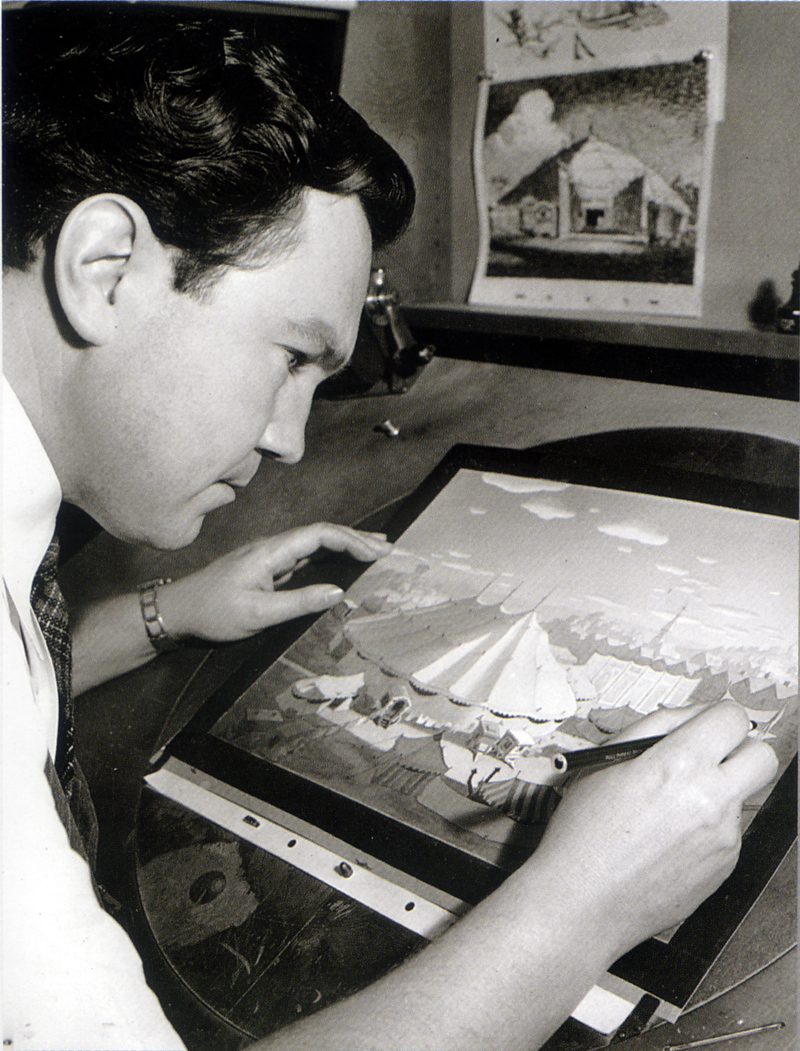
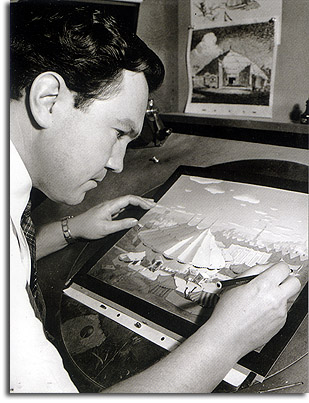 Herb Ryman works on a background for Dumbo, 1940 It was a whole new world for Herb. Accustomed to the buttoned-down atmosphere of MGM, he found Disney a freewheeling and informal environment, where one was on a first-name basis with the boss and you didn’t even have to wear a tie to the office.
Starting with Pinocchio, Ryman worked on all the films of Disney’s golden age. He made the move from the Hyperion lot to the new studio in Burbank in 1939, and took up residence in the story department doing layout work on Dumbo. He would later work with his friend Ken Anderson on the “Pastoral Symphony” segment of Fantasia.
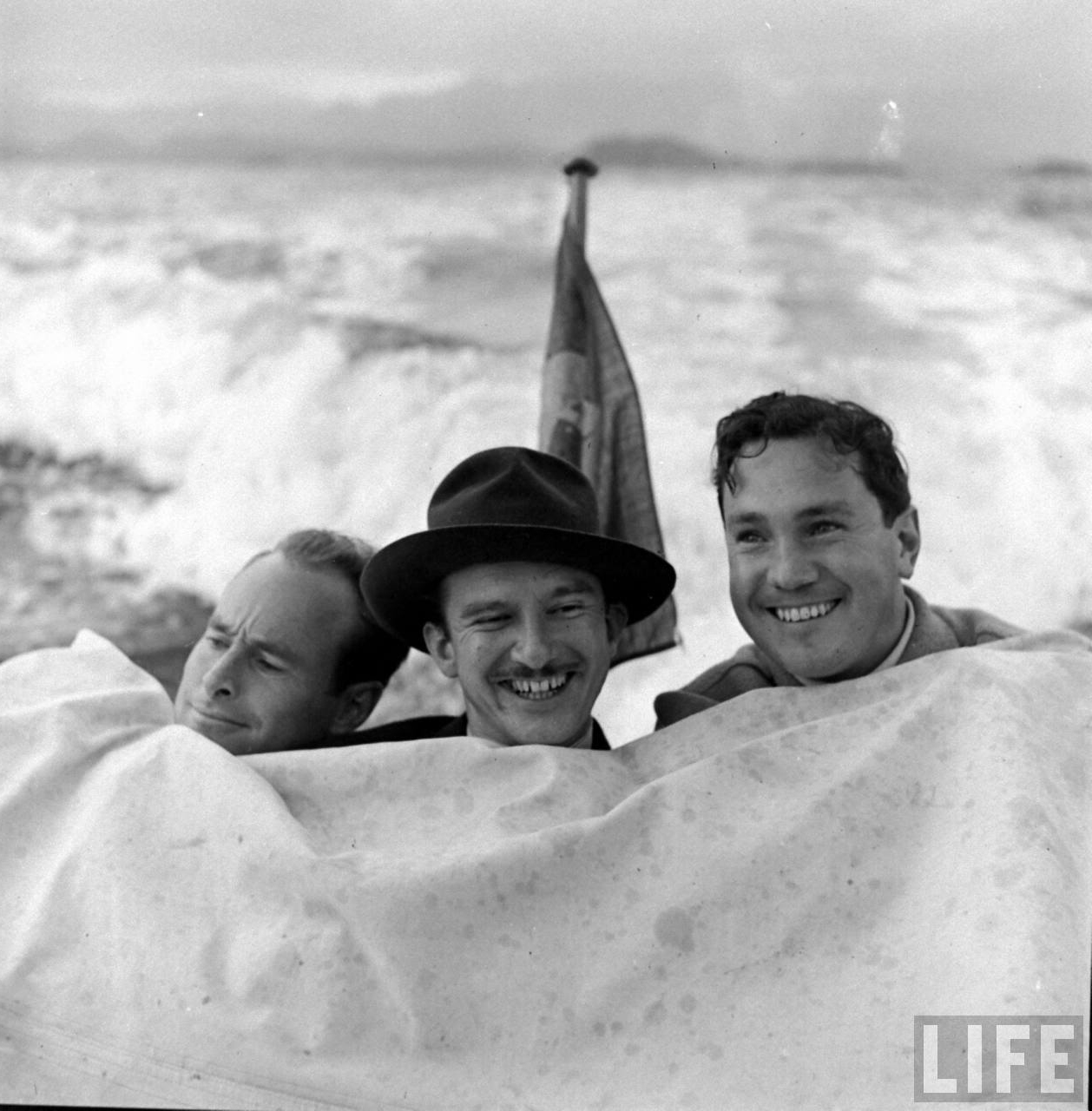
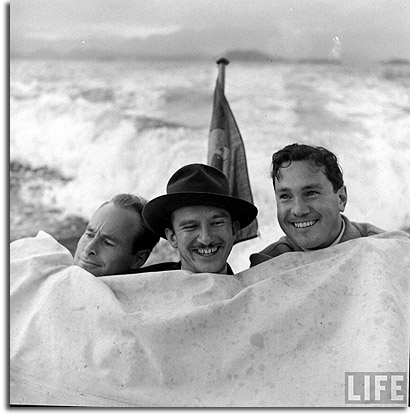 Lee Blair, Bill Cottrell and Herb Ryman in Brazil, 1941 (LIFE photo) Herb’s greatest Disney adventure would come in 1941. Toying with the idea of leaving the studio to resume his fine art work, Ryman was drafted as part of “El Grupo.” This group of Disney artists and writers would join Walt on a three-month tour of South America in late 1941, doing research for a series of films and attempting to spread all-American goodwill to counter the Axis threat that threatened to spill into our hemisphere.
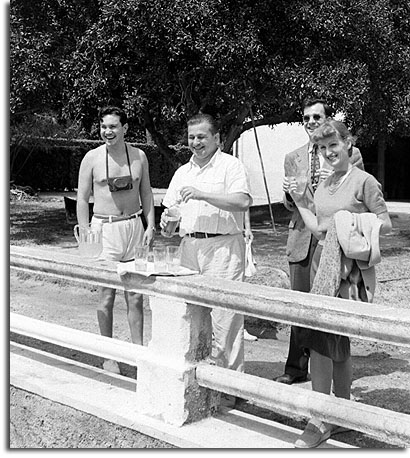 A little something for the ladies: Herb Ryman, Frank Thomas and Mary Blair in South America, 1941 (LIFE photo) Needless to say, Walt and his artists managed to handily beat back the wave of Nazi intrigue. In a series of appearances and events in Brazil and Argentina, El Grupo were treated like rock stars. When not mingling with the elite, they also managed to get some work done…
 Ryman sketches a stork very similar to one that would later appear in The Three Caballeros (LIFE photo) As well as an occasional bit of rest and relaxation…
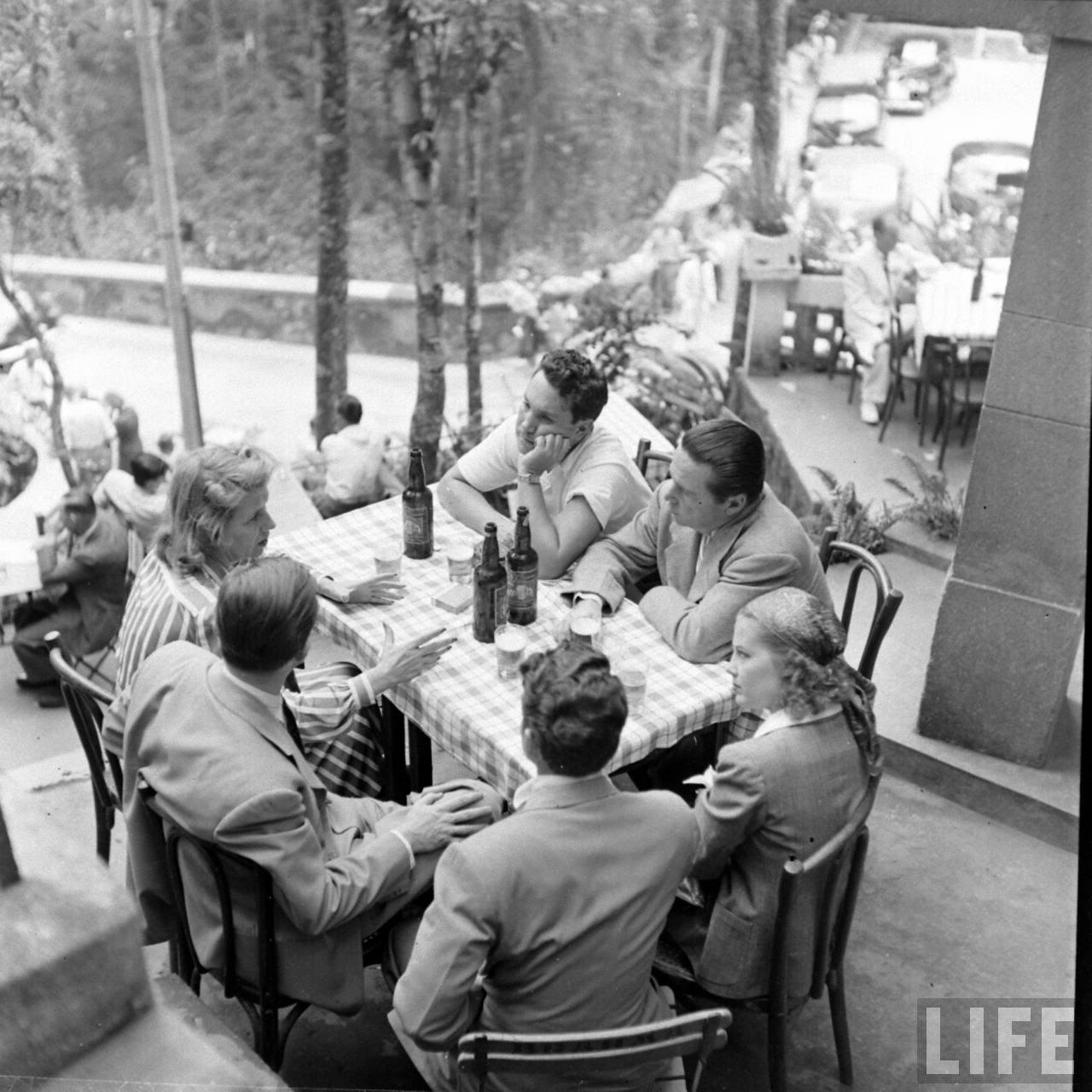
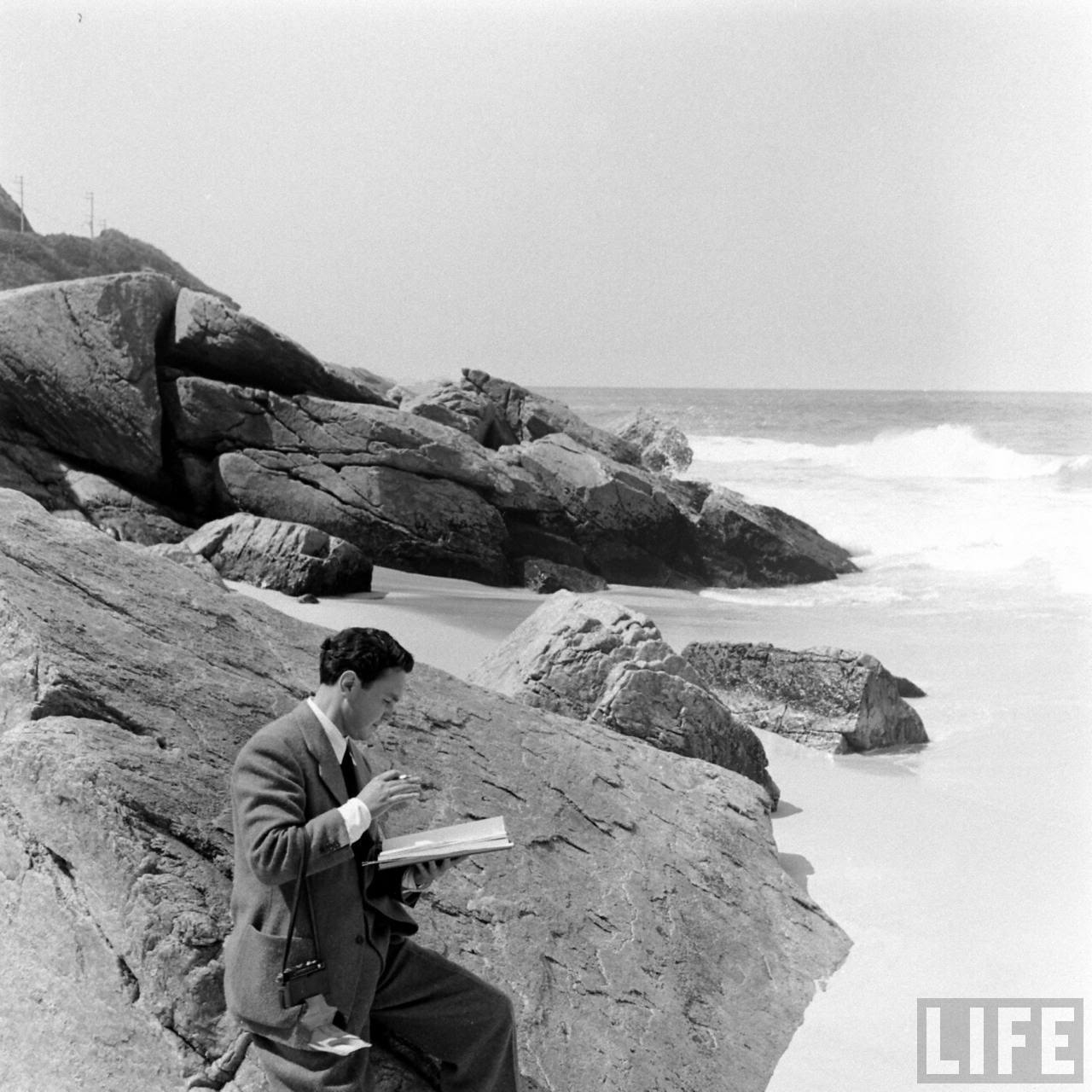
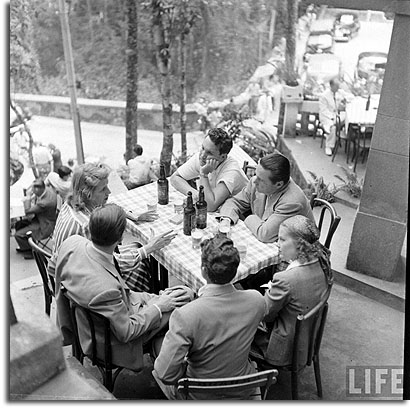 Hazel and Bill Cottrell (L) share a quiet moment – and some brews – with Herb Ryman and Ted Sears (R). Story artist Jack Miller and Janet Martin are in the foreground. (LIFE photo) 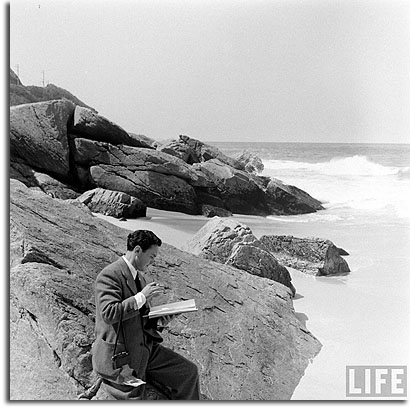 The Young Man and the Sea: Herb gets a quiet moment in South America, 1941 (LIFE photo) After touring Brazil and Argentina, El Grupo split up to better cover the continent. Ryman joined Lee and Mary Blair and Jack Miller, and later Janet Martin and Larry Lansburgh, in a far-ranging crew that would explore South America, travel up through Central America and Panama, and pass through Mexico on their way back to the United States. The result was an incredible amount of research that would soon be used to create Saludos Amigos and The Three Caballeros.
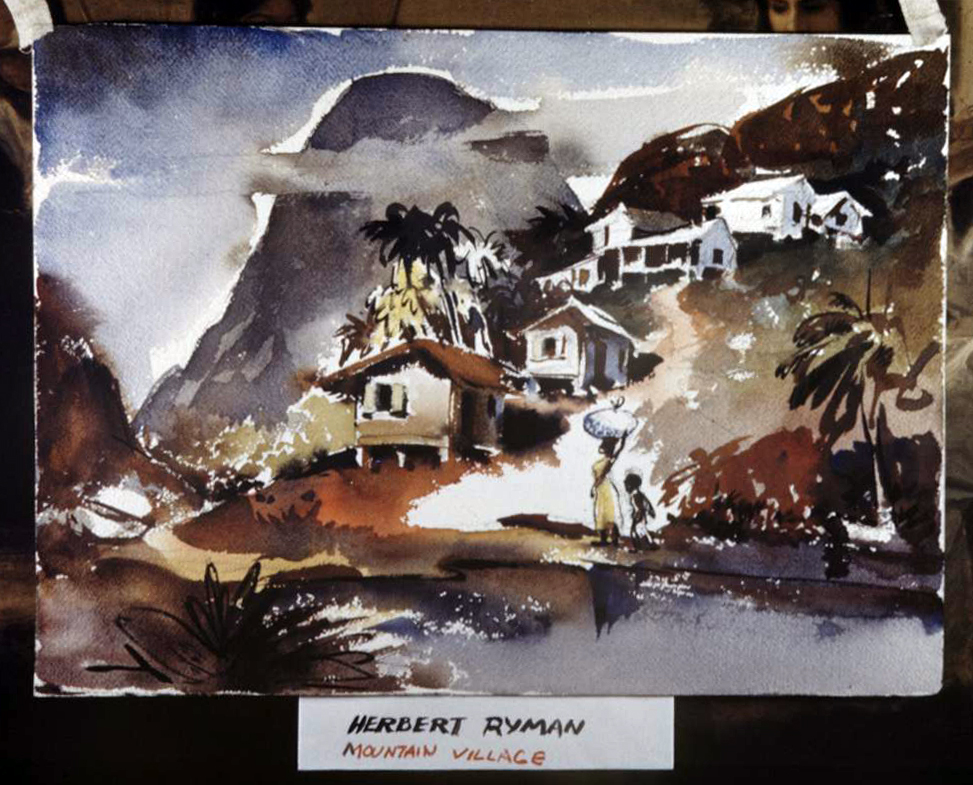
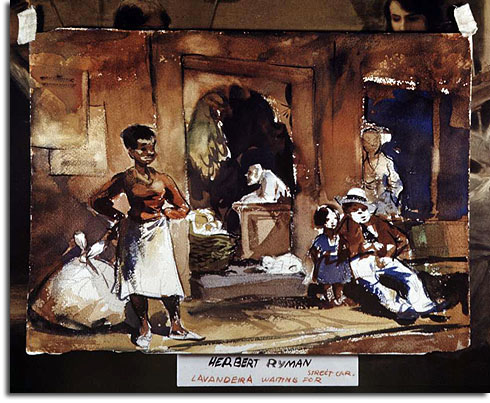 Lavandeira Waiting for Street Car Lavandeira Waiting for Street Car by Herb Ryman, 1941  Mountain Village Mountain Village by Herb Ryman, 1941 And as for that papagaio…
 An early sketch of the character that would later become Jose Carioca, 1941 Sadly, soon after El Grupo returned to the U.S., the nation was cast into World War II. Disney’s production ground to a halt, save for package features and training and propaganda films. Ryman considered joining the Navy, but Walt implored him to stay – someone had to stay and help him, Walt argued, because if the studio was forced to shut down it would never reopen.
Herb stayed. Or, in his words, he allowed Walt to convince him to stay.
The work wasn’t as exciting, though; working with his friend Ken Anderson on Victory Through Air Power, Herb’s talents were going to waste on sweeping arrows and tactical diagrams. After the war, in 1946, Herb would leave the Disney studio for a new project – one that tied in closely with his earlier adventures in the distant East. But that’s for next time…
Coming up: 20th Century Fox, Ringling Brothers, world travels, and Disney… again.
Related Posts...
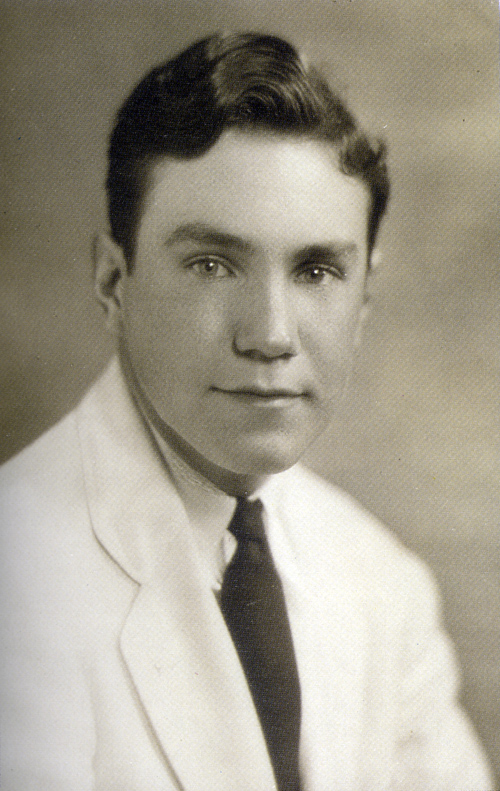
By Michael - June 28th, 2010  Portrait of the Artist as a (Very) Young Man From the day of his birth, 100 years ago today in Vernon, Illinois, Herbert Ryman was never meant to be an artist. It was simply an impractical concept; after all, starving artists never found gainful employment! It would have been far more respectable to follow in the steps of his father, a local doctor. But after the elder Ryman died in the trenches of World War I, and Herb’s mother Cora became the sole breadwinner of the family, the idea of one of the three Ryman siblings wasting their lives with the study of art seemed unthinkable.
Thankfully for all of us, Herb and fate had other plans.
 Through a concerted campaign of persuasion, and a bit of good old fashioned guilt when Herb seemed sure to die from scarlet fever, the young artist did manage to dodge a life as medico. After studying at Millikin University in Decatur, Herb managed to escape to the Art Institute of Chicago where he would immerse himself in the fine arts. His natural talents combined with hard work and he eventually graduated cum laude. Through a concerted campaign of persuasion, and a bit of good old fashioned guilt when Herb seemed sure to die from scarlet fever, the young artist did manage to dodge a life as medico. After studying at Millikin University in Decatur, Herb managed to escape to the Art Institute of Chicago where he would immerse himself in the fine arts. His natural talents combined with hard work and he eventually graduated cum laude.
Herb’s talent was spotted early on; throughout his college years he exhibited his art to great acclaim. But while he obviously had the skill to make a life as a fine artist, the nation was plummeting into the abyss of the Great Depression. The only obvious option for employment after college was in the field of commercial art, but Herb hardly wanted to get stuck in the advertising game. Instead he packed his bags and headed to Hollywood, were more interesting opportunities would most certainly present themselves.
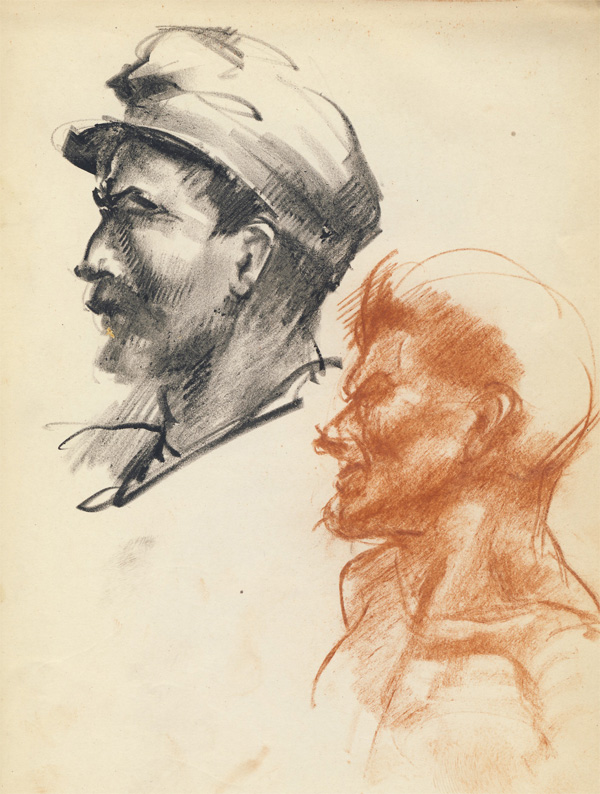
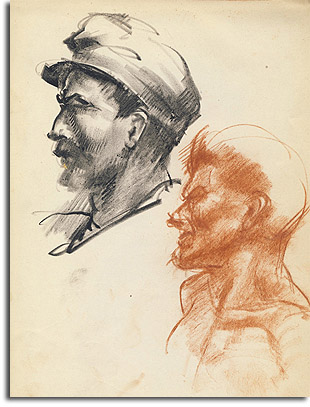 These sketches by Herb Ryman, from his time as a student at the Art Institute of Chicago, provide an early example of his observational skills 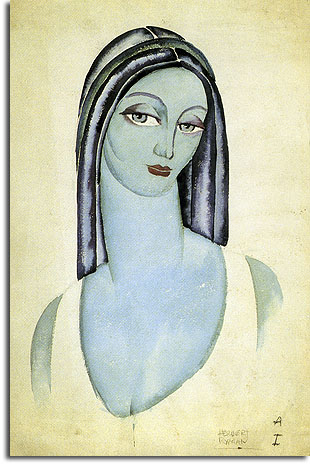 I find this piece by Ryman, labeled “Portrait of a Blue Lady,” interesting because it’s so unlike his other work. The sleek, simple lines evoke the Art Deco movement. This piece dates to around 1932, while Ryman was a student at the Art Institute of Chicago. After a series of adventures, Ryman wound up at Metro-Goldwyn-Mayer in 1933, smack-dab in the middle of Hollywood’s golden era. He took a position in the Art Department, working for legendary art director Cedric Gibbons. An early assignment was painting prop oil paintings for the Lionel Barrymore vehicle The Late Christopher Bean. A portrait of Garbo followed, for Queen Christina.
Most of Ryman’s work at Metro, though, was as a sketch artist. He worked on various pieces of conceptual work, creating inspirational sketches for set designs. He worked on layout sketches, and continuity illustrations. He was, essentially, storyboarding these live action features – something that would come in useful later.
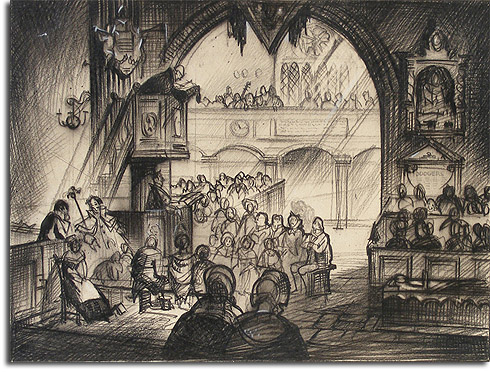 A sketch for George Cukor’s David Copperfield, 1935 Herb worked non-stop at MGM – twelve hours a day, seven days a week. Projects with which he was involved included Treasure Island, China Seas, David Copperfield, A Night at the Opera, Naughty Marietta, The Merry Widow, The Barrets of Wimpole Street, The Last Waltz, A Tale of Two Cities, Lady in Ermine, Rasputin and the Empress, and Tarzan and His Mate.
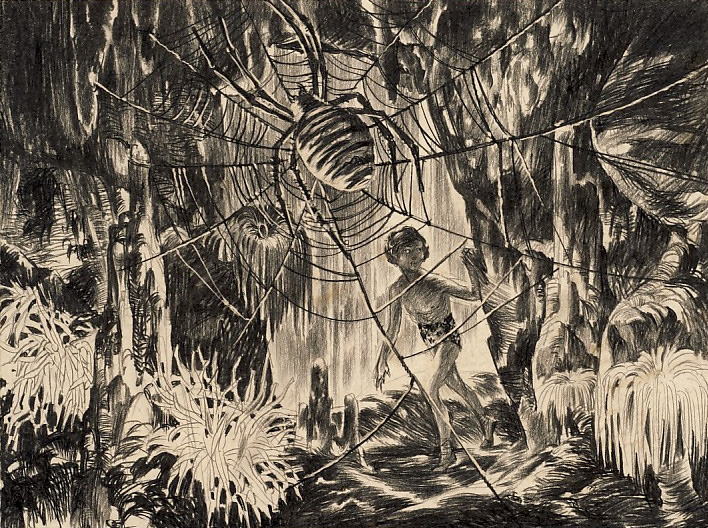
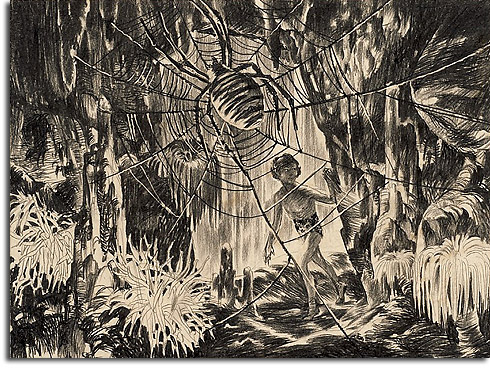 This really fantastic sketch was drawn for the production of Tarzan Finds a Son! starring Johnny Weismuller, 1939 Herb needed a break from the design department when he decided to take a trip to the Orient, inspired by his work on MGM’s The Good Earth. After circumnavigating the globe and witnessing a world in flux, he returned to Hollywood. He missed a chance to serve as art director for Gone with the Wind, but while teaching art classes at the Chouinard School of Art in Los Angeles one of his exhibitions of watercolors caught the eye of some artists from the Walt Disney Studios… But those are all stories for next time.
Coming up: Herb travels the world, works for the mouse, and then leaves… Only to come back. Disneyland, Siam, EPCOT and Emmett Kelly await…
Images for theses stories come from a variety of sources, notably A Brush with Disney (2000), but special thanks must go to John Donaldson, author of Warp and Weft: Life Canvas of Herbert Ryman.
Related Posts...
By Michael - June 28th, 2010  A little something for those industry folks out there… A little something for those industry folks out there…
The Themed Entertainment Association (TEA) announced last week that its annual SATE conference will be held September 30th through October 1st at the Universal Orlando resort in Florida. The two-day conference will focus on the theme “Telling the Inherited Story,” with contributions from several prominent design groups in the theme park and museum industry.
The preliminary slate of speakers includes a team from Universal Studios, who will discuss the newly-opened Wizarding World of Harry Potter at their Islands of Adventure park. The designers will take conference-goers through their creative process, as they tried to retain the integrity of the stories from the books as they were translated into an immersive, interactive environment.
Disney will also be on hand; the Imagineers’ presentation is entitled “Keeping the Magic Fresh: Evolving the Legacy.”
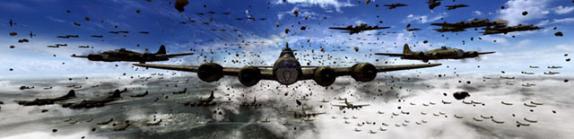
 Art for “Beyond All Boundaries” Two museums are also scheduled to discuss their own new projects. The Hettema Group will talk about their creation of a new attraction for the National World War II Museum in New Orleans; Beyond All Boundaries, an award-winning “4-D” theatrical multimedia experience, has raised museum attendance to record levels.
From the Fort World Museum of Science and History, Van Romans and Chick Russell will be on hand to discuss that facility’s successful expansion, upgrade, and “re-imagineering.”
The SATE conference, which stands for “Storytelling, Architecture, Technology, Experience”, has been held annually since 2007 by the Themed Entertainment Association. This nonprofit industry group represents creative professionals in a variety of disciplines, and the annual conference is intended to bring these professionals together from all corners of the industry and all manner and scope of attractions. It serves as both an opportunity to network with other creative professionals, and to share and explore new ideas.
Registration for SATE 2010 is currently underway; interested parties can find out more via TEA’s website.
Related Posts...
|
The Progress City Primer
 From the Progress City archives comes this collection of 33 tall tales and true from Disney history. Available in paperback, hardback, and ebook formats. |
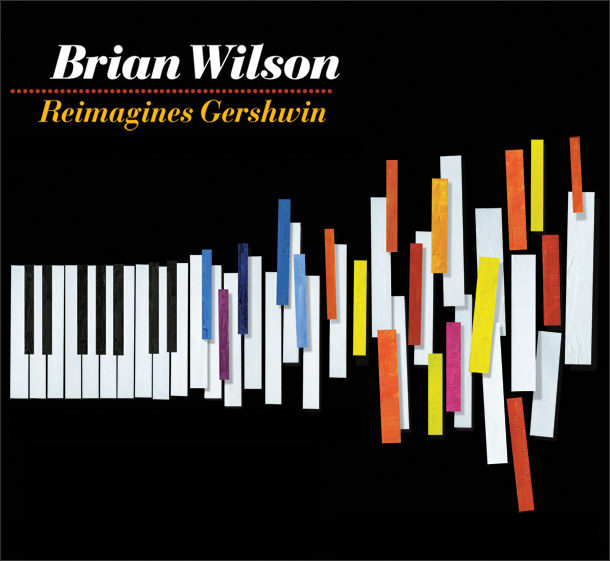 Bumble Boogie, anyone?
 On August 17th, the new “Disney Pearl” imprint will release an album by the great Brian Wilson containing covers of works by George and Ira Gershwin. Some of these songs are well-known standards, while two are previously unfinished compositions that Wilson has completed for this record.












Recent Comments