Contribute to Our Research |
By Michael - May 21st, 2009  The S.S. Disney, from bow to stern: the Orbitron, a ferris wheel, the glass-covered multideck hub area, the Casey Jr. Circus Train and glass-canopied carousel, and its a small world ( Mark Hickson) Hey, remember in 1994 when Disney built a traveling theme park inside the hull of a massive supertanker? You don’t? That’s because it’s insaaaaaaaane!
Alain Littaye has dropped this 100-megaton bomb in his interview today with former Imagineer Mark Hickson. Hickson worked at WDI on the S.S. Disney project in 1993-94, and has posted some images from the project on his website.
This surprising project began with an off-handed joke by a Navy Admiral to Disney executive Jim Cora, suggesting that Cora build a theme park on an unused aircraft carrier. Somehow this wacky notion found purchase in the ranks of management, and soon Imagineers were casting about for the proper type of vessel to contain an actual floating theme park.
Hickson was brought on board the project because of his previous experience with shipbuilding. He suggested that Disney use a supertanker; the ship’s vast internal capacity would allow Disney to build a full five decks of attractions and guest areas. It was decided that the ship would be used to tour the Pacific Rim, stopping at many tourist-friendly ports in China, southeast Asia, and Australia. The ship would stay roughly two and a half months in each port, returning to each city only every four or five years.
As to what would be contained in this floating park, Hickson mentions the following:
On the top deck there was the Orbitron, Casey Jr. Train, a large Ferris Wheel, Alice in Wonderland’s spinning Tea Cups, Dumbo, and a Fantasyland Carousel under a glass dome! At the stern end of the top deck, there would be It’s Small World.
…
Other attractions included Peter Pan’s Flight, Snow White’s Scary Adventures, Indiana Jones, Star Tours, a 3D movie theatre, and even a Space Mountain roller coaster!
Due to technical issues there would be no water flume attractions; its a small world would utilize an omnimover ride system instead of boats.
The ship would contain six restaurants – five quick-service and one table service. It would have a full entertainment division, and Disney considered a separate barge which would provide a nighttime fireworks show. A third ship would be added to the fleet to transport cast members from port to port.
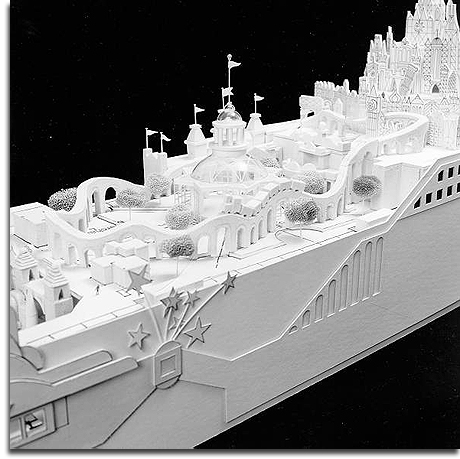 The S.S. Disney model, amidships, reveals the Casey Jr. Circus Train circling the glass-canopied carousel. The facade of it’s a small world is visible to the stern. ( Mark Hickson) You can read the full interview at Alain’s site, but I’ll point out one key item. Like so many other projects we talk about, you’ll notice that the relevant dates for this concept are 1993 & 1994. So now the S.S. Disney joins Port Disney, WESTCOT and Disney’s America in the pantheon of great abandoned projects from that era. Why was this particularly fantastic project abandoned? Says Hickson, “Michael Eisner and Frank Wells both loved the project, but after Frank’s death, things changed.” You said it, brother.
The strategic planning group at corporate didn’t want to do a floating theme park, they wanted to do a cruise ship. Eventually they convinced Michael that a cruise ship was easier to do.
Long-time Disney watchers are well familiar with the infamous “strategic” planning group. Not surprisingly, they also had their hands in the demise of the S.S. Disney.
Perhaps this plan will be revived someday; I love the design of the ship – the giant steampunk gears and Victorian canopies give it a very distinctive, cool look. I’m not even that crazed about the mix of attractions they selected – it’s just such a crazy, appealing idea that you can’t help but wish it had come to pass. In a way its self-contained, multistory design is a descendant of Walt’s original “location based entertainment” concept, the unbuilt Riverboat Square. It’s amazing to discover this long-lost project, and kudos to Alain for uncovering it and to Mr. Hickson for sharing his art and story with the public.
Related Posts...
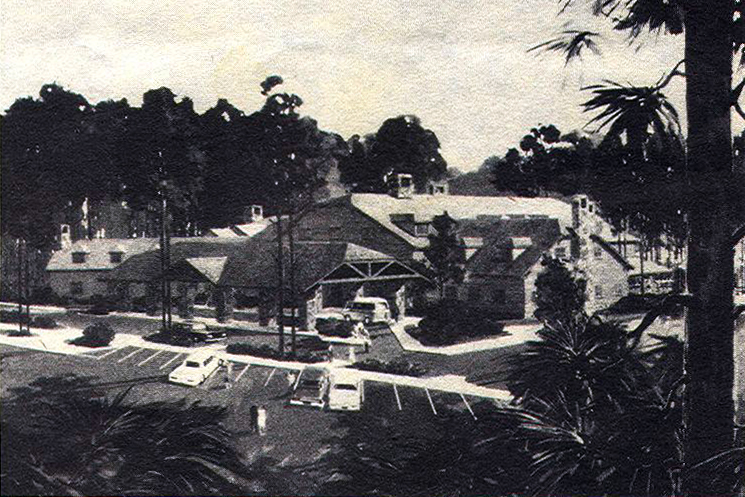
By Michael - May 21st, 2009  “Cypress Point, located between Fort Wilderness and the Contemporary Resort Hotel, will offer guests a ‘rustic’ WDW vacation.” (Disney) To start with, I have a few notes. First, this post was originally going to be another Neverworlds piece, but I went back and forth on that (for reasons that shall become apparent) and instead I’ve elected to label this an Elseworld – an alternate, unrealized version of a Disney attraction that we later received in a different form. The other point I’d like to make is that I was initially very smug, thinking that I was delivering unto the web the very first widely-known rendering of the Cypress Point Lodge. A single Google search deflated my ego, though, as Brian Martsolf’s excellent Disney World site had beat me to it. He also scooped me on some other renderings that I had for upcoming stories. Martsolf!!!!
In any case…
Cypress Point Lodge will be a medium-sized hotel facility, located on the south shore of Bay Lake near our Fort Wilderness Campground Resort. Encompassing 550 rooms and 50 log cabins on the beach, Cypress Point Lodge will offer a romantic notion of a turn-of-the-century hunting lodge secluded in a deep forest. Neither the trees nor the buildings dominate the entire area; but blend together in a natural harmony.. One can almost hear the crackling fireplace and feel the large wooden beams offer a haven of security and comfort.
Cypress Point Lodge will also include: two restaurants, a pool, extensive beach, and lake dock. Guests will commute in and out of Cypress Point Lodge by watercraft.
– Walt Disney World Eyes & Ears, 4 November, 1982
As Walt Disney World’s first decade came to an end, Disney executives were looking ahead to the 1982 debut of EPCOT Center. Knowing that a second gate would extend guest stays and increase demand for lodging, management decided that it was time to expand Disney’s lineup of hotels. Original opening-day plans in 1971 had called for the quick construction of three new hotels to join the existing Polynesian and Contemporary resorts; by 1975, the Asian, Venetian and Persian hotels were to have debuted on the shores of the Seven Seas Lagoon and Bay Lake. By the turn of the decade, however, these resorts had yet to see the light of day.
The reason for this reluctance to build, despite the fact that Disney’s existing hotels were constantly and completely booked year-round, was Disney’s extremely cautious Chairman, E. Cardon Walker. Disney’s original expansion plans were scheduled to begin with the opening of the Asian Resort in 1973 – later pushed to 1974 – but by the time construction was to begin, the first gas crisis of the 1970s had hit. Management’s concerns mirrored those of today, but despite a dip in attendance at the parks, the Disney hotels remained packed.
Other hotels and motels in the area, though, were not so lucky. Many of these businesses had swooped in overnight in the wake of Disney’s arrival in Orlando, hoping to strike it rich like the low-rent hotels that surrounded Disneyland in Anaheim. The result was a sudden oversaturation of the market, which was probably doomed to collapse regardless of the Arab oil embargo. Many of these properties never even opened; some were left unfinished, and some closed immediately upon opening because they could not keep enough guests to pay off their construction loans.
This spooked Walker, who abandoned the bold existing plans for expansion and vowed not to build another major hotel on property for many years. Instead of the ornate and highly-themed Asian Resort, 1973 instead found Disney opening the very small and inexpensively-themed Golf Resort. Despite overwhelming guest demand, it was the last Disney hotel to open for fifteen years.
The ensuing years would see expansions to the Polynesian and Golf Resorts, as well as the slow roll-out of the Villas at Lake Buena Vista. But when construction of EPCOT Center was underway, Walker and others knew that it was time to start building new hotels. Sometime around 1980, it was announced that three new hotels would be built at Walt Disney World to coincide with the opening of EPCOT Center. The first was the Grand Floridian Beach Resort, to be built on the former Asian Resort plot. The Mediterranean Resort was next, giving a new name to the original Venetian Resort project. This was, of course, never built, despite Michael Eisner giving the concept a third try in the 1990s.
The final new resort, and the reason for all this folderol, was to be called the Cypress Point Lodge. As mentioned in the citation above, it would be a medium-sized hotel with 550 guest rooms and 50 cabins on the shore of Bay Lake. The theme of the resort, and the reason that this unbuilt hotel doesn’t belong in the realm of Neverworlds, is quite similar to the Wilderness Lodge which opened in 1994. The Cypress Point Lodge was a different design, but it shared a theme and was intended for the same plot upon which the Wilderness Lodge was built fourteen years later.
 The front facade and arrival area of the Cypress Point Lodge. Rather like the little brother of the Wilderness Lodge. The origin of the Cypress Point Lodge is somewhat mysterious. Jim Hill claims that it was always intended to be built as the sixth Disney resort, after the Polynesian, Contemporary, Asian, Venetian and Persian. According to Hill, it was to be the first hotel built in Walt Disney World’s “Phase III”, which would have lasted from 1981-86. I’ve seen little from this period to corroborate this fact; the Lodge isn’t mentioned by name in a Walt Disney Productions annual report until 1981, although the three new hotels are referred to without elaboration in 1980. I can find nothing from the 1968-71 period that mentions the Lodge, although aerial photos from the time show that the site intended for the Lodge had been cleared for some purpose by 1971. In fact, in early plans (pre-1971), the site that would later be intended for the Cypress Point Lodge was originally designated for a campground area.
In the Walt Disney World souvenir guide from 1973, it’s mentioned that a “Lodge” would be built at Fort Wilderness to house guests, but it’s unclear if this would have been our Cypress Point Lodge or rather an extension of the western town that was then planned for development around what is currently Fort Wilderness’s Settlement Outpost. I’ve always assumed that it was the western town idea that eventually evolved into the aborted Buffalo Junction/Wilderness Junction project in the 1990s.
It’s interesting that the Cypress Point Lodge would have also featured separate cabin areas; this would have given the area a more villa-like aspect, and it’s also possible that those cabins eventually morphed into the Wilderness Junction concept and then the Wilderness Lodge DVC property. This is all speculation, though.
What we do know is that by 1980, the Cypress Point Lodge had been included as part of the large model of the Walt Disney World property that occupied the post-show area of the Magic Kingdom’s Walt Disney Story attraction. I don’t know how long the model remained on display, but the hotel was widely touted as a much-needed expansion of guest capacity as late as 1982. In articles both before and after EPCOT Center’s opening that October, Card Walker and others mentioned the three new resorts coming to Walt Disney World. I have yet to find a mention of the hotel in 1983 or after, but that’s probably because all funds were diverted for the completion of EPCOT Center’s Phase I attractions. By then there began to be a shakeup in management, and Michael Eisner arrived in 1984 to change the course of Disney history.
This is one case, though, where Disney fans might have won out. The Cypress Point Lodge does indeed look quaint, and it would be nice to have those cabins on the beach, but it’s hard to deny the grandeur and beauty of the Wilderness Lodge. Architect Peter Dominick’s take on Yellowstone’s famous Old Faithful Inn is a masterwork of design, and I would be hard pressed to say that the Cypress Point Lodge would have been an improvement.
One final, interesting note – one common complaint about the Wilderness Lodge is that, unlike other deluxe hotels in the area, it does not have monorail service. Yet the original plans for the Cypress Point as well as the Mediterranean Resort called for them to both center around boat service. Then again, in 1980 no one at WED would have anticipated the need to get from Bay Lake to Animal Kingdom!
Related Posts...
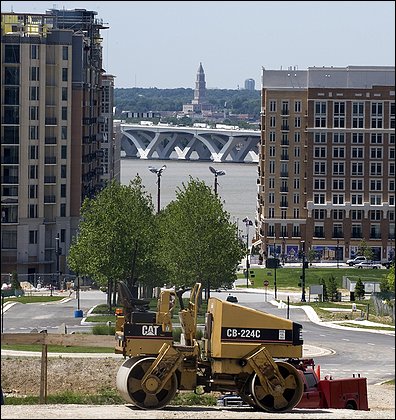
By Michael - May 19th, 2009 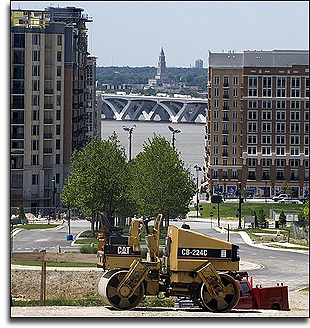 Your newest magical vista?! The new Disney hotel site in Maryland (Washington Post) Continued apologies for my prolonged absence – it looks like it’s going to be a few more days before my interwebs are up and running again. But this story just came across my transom and I couldn’t resist getting online at work to put this out there. It certainly qualifies as the “WTF” story of the week – Disney has spent $11 million to purchase a 15-acre tract in Prince George’s County, MD., across the Potomac from Washington, D.C. Part of a 300-acre development called National Harbor, the site will be used for a Disney-branded resort hotel.
No, seriously. Behold the mighty press release:
National Harbor Sells Land to Disney
Site Being Considered for New Resort Hotel
NATIONAL HARBOR, Md., May 19 /PRNewswire-USNewswire/ — The Peterson Companies announced today the sale of land at its National Harbor development near Washington, DC to Walt Disney Parks and Resorts. Disney is considering using the 15-acre site overlooking the Potomac River in National Harbor, MD as the location for a resort hotel for families and others visiting the National Capital Region.
“We’re thrilled Disney has decided to invest in National Harbor,” said Milton V. Peterson, chairman of the Peterson Companies. “Disney is the top family entertainment company in the world, and its purchase is a great vote of confidence in the future of National Harbor and the Washington area as a top family tourism destination.”
The new resort hotel would be one of Disney’s stand-alone resort hotels separate from the Disney theme parks. This new resort hotel, like the project under construction in Hawaii, will be in a prime geographic location and will provide guests with the same comfort, fun and amenities for which Disney is famous.
“As we began identifying possible locations to grow our business, the Washington, DC area immediately jumped to the top of the list,” said Jay Rasulo, Chairman of Walt Disney Parks and Resorts. “National Harbor offers an array of entertaining activities for regional visitors, but it is also a family-friendly base camp, from which visitors from around the world can explore the stirring sights and inspirational stories of our nation’s capital. We believe National Harbor has the unique opportunity to offer a new level of family-friendly hospitality.”
Disney purchased the Maryland property from the Peterson Companies for $11 million.
About National Harbor:
Rising from the banks of the Potomac River in Prince George’s County, MD., National Harbor is a new 300-acre destination waterfront resort. With six hotels and 3,000 rooms, National Harbor features the Gaylord National Resort & Convention Center. Many attributes include the tree-lined avenue American Way, public art including “The Awakening” sculpture by Seward Johnson, shops and offices, numerous high rise residences and the largest marina on the Potomac River. It is also the future home for the new Cesar Pelli-designed National Children’s Museum. The master developer for National Harbor is The Peterson Companies, one of the largest privately owned development companies in the greater Washington area specializing in large mixed use developments.

Of course the immediate thing that most Disney fans will think of upon hearing this news is the aborted Disney’s America project of years ago; this project obviously has no relation to that park design, and will consist only of a hotel development. This National Harbor development, which has run into problems recruiting developers due to the economic downturn, seems to be a rather conventional mixed-use hotel, restaurant, convention and conference project.
The 500-room Disney hotel would provide a prominent anchor for the project, and one assumes will provide a base for “Adventures by Disney” tours of the area.
It’s rare that Disney does something that completely surprises me, but this really takes the cake. Their upcoming resort in Hawaii was much less surprising, as it seemed to fit with many tried-and-true Disney formulae. Dropping a Disney hotel into the middle of an urban area, though, is something new, and it indicates a direction in which the company is obviously headed. Between DVC and Adventures by Disney, it’s clear that they intend to expand the concept of these smaller-scale projects across the nation or possibly the world.
I’m not sure really what to think about that. While I regret their decision not to build Disney’s America in 1994, I don’t really know what Disney can bring to a rather typical city-bound hotel development. Will it be highly themed, or just another high-rise hotel structure? The obvious historical themes – Colonial, Federalist, Georgian, etc – don’t meld well with the high-rise structure that they’ll no doubt want to build. Will they instead build some towering, cookie-cutter structure that looks like every other hotel in the area? Or, heaven forbid, will they try to slap some Jeffersonian pediment on for style?
I guess I just don’t understand what the purpose of this is. Still, $11 million is pretty cheap in Disney terms, and I suppose that they took advantage of the real estate crunch to get a good deal. I can’t say that I’m itching to stay in a Disney hotel near Washington D.C., but it can’t hurt, can it?
Regular posting to resume in a few days…
Related Posts...
By Michael - May 13th, 2009 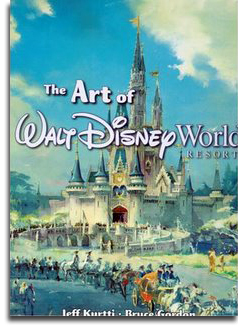
One of my innumerable long-standing gripes has been the inability to obtain merchandise that is “exclusive” to the Disney parks without either taking a trip to the parks or paying a huge markup to a third party. We’ve seen this problem in action lately with the release of The Art of Walt Disney World, a park-only book release that everyone assures me is amazing but which I cannot purchase because I’m not in Orlando.
Imagine my surprise when I get an advertisement in my email today from the online Disney store, announcing that “Disney Parks” merchandise is now available through their site. Despite the noxious “Disney Parks” branding and the “enchanting” promotional photos of young princesses in the ad – in the minds of the Disney marketing staff, Disney World is occupied entirely by swarms of feral children who have somehow made it to Orlando without parents or adults whatsoever – I was excited.
Of course, the book isn’t on there. So far the store seems to focus on the less-exciting aspects of park merchandise – mouse ears and snow globes. But I’m willing to give them the benefit of the doubt and hope that this is just the start. If they have any sense about them, they’ll add park books, video and music as soon as possible.
There’s one thing that you can do, though. Click on the “contact us” button in the upper, right-hand corner of the Disney site and ask them to carry these exclusive park-related titles on their site. Specifically mention The Art of Walt Disney World, and underscore that the only way they can get their hands on your money is to actually offer you the opportunity to purchase it. I’ve sent in my email, and hopefully that won’t be the only one.
One last thing – thanks to everyone who keeps checking in while we’re in reduced-posting mode this week. We’ll be back soon!
Related Posts...
By Michael - May 9th, 2009  Oh for the love of… ARE YOU EVEN TRYING ANYMORE??
New Tokyo DisneySea Attraction: Toy Story Mania!
Based on the Disney-Pixar Toy Story film series, Toy Story Mania! is an interactive ride attraction through the world of Woody, Jessie and other toys from the films. Guests board the ride vehicle and, wearing 3-D glasses, take aim at virtual targets in a series of fun and exciting games featuring 3-D images.
Attraction Facts
Opening date: 2012 (tentative)
Location: New York area of American Waterfront
 COME ON!! COME ON!!Related Posts...
|
The Progress City Primer
 From the Progress City archives comes this collection of 33 tall tales and true from Disney history. Available in paperback, hardback, and ebook formats. |
 The S.S. Disney, from bow to stern: the Orbitron, a ferris wheel, the glass-covered multideck hub area, the Casey Jr. Circus Train and glass-canopied carousel, and its a small world (Mark Hickson)
 The S.S. Disney model, amidships, reveals the Casey Jr. Circus Train circling the glass-canopied carousel. The facade of it’s a small world is visible to the stern. (Mark Hickson)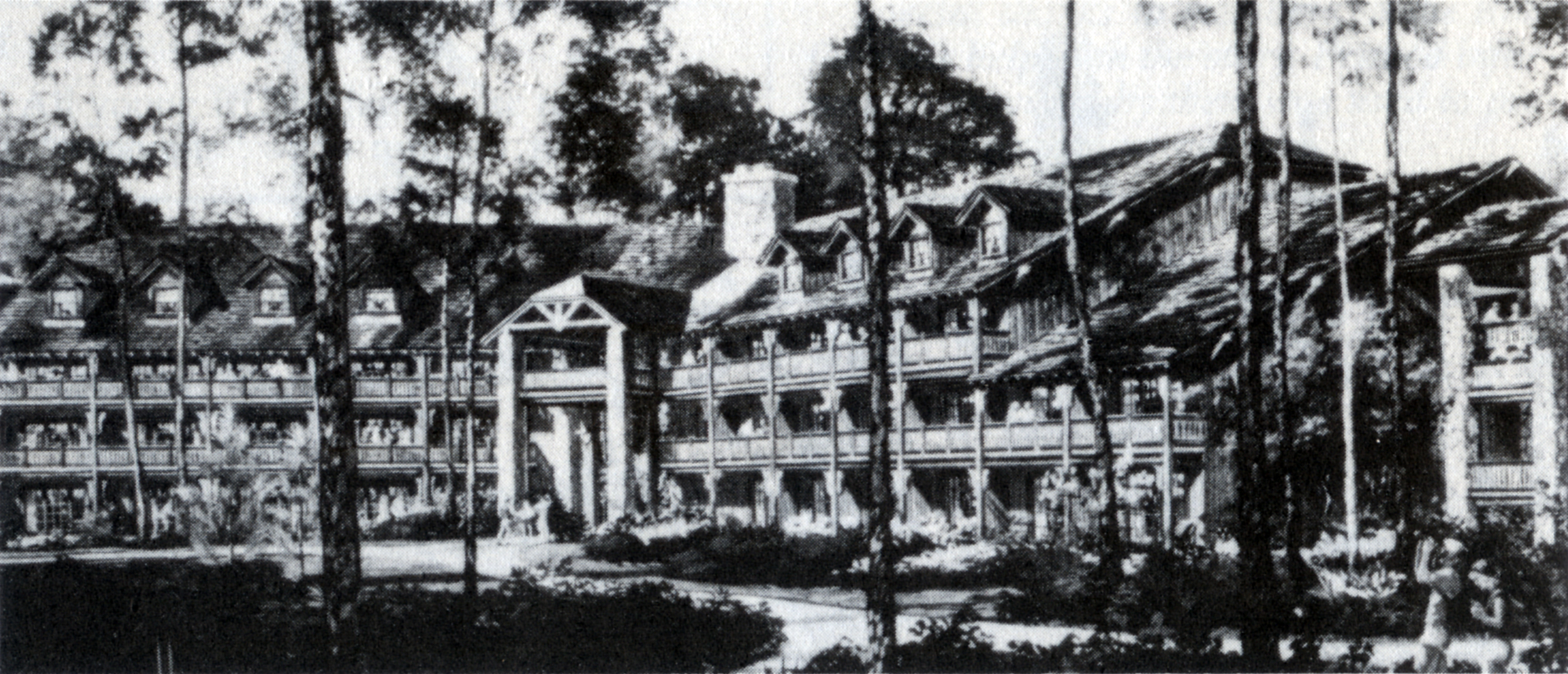







Recent Comments